


The distinction between owned-and-operated stations (O&Os) and network affiliates has never been more consequential — and with the FCC signaling openness to loosening ownership rules, it may soon determine which stations thrive and which struggle.
Any implied or proposed Sinclair–Scripps merger runs headlong into the realities of the regulatory framework that exists today.
The U.S. pay TV market is nearing a tipping point where traditional cable and broadcast television can no longer deliver reliable mass reach for advertisers — a shift that could upend the economic foundation of local and national TV advertising alike.
Without enforceable accountability, the move to ATSC 3.0 risks becoming ATSC 1.0 “2.0” — another costly cycle of broken promises, obsolescence, and squandered public value.
Automation and AI together threaten to replace human journalists, hollow out local newsrooms, and erode the trust and civic value audiences rely on.
Gray may not have solved every problem left by the demise of RSNs, but it has charted a direction worth emulating.
Smartphones, streaming, creators, and AI aren’t existential threats — they’re the raw materials for a next-generation local news model.
Radio’s 2025 culling of signals may only be the prelude to what’s ahead for TV.
The Jimmy Kimmel spectacle may have grabbed headlines, but it was a sideshow compared to the real story: the accelerating obsolescence of the broadcast TV model itself.
If Brendan Carr’s vision prevails, local TV risks becoming both homogenized and politicized — consolidated into a few large conglomerates, and pressured to avoid programming that might displease those in power.
The real question is whether broadcast ownership rules written for a world of media scarcity can still make sense in a world of communications abundance.
“KidVid” rules were born of good intentions — to ensure children weren’t shortchanged by profit-driven commercial broadcasters. But three decades later, they’ve morphed into an outsourced compliance exercise dominated by a single producer.
Broadcasters seeking regulatory support, legislative goodwill, or community backing — whether for NextGen approvals or large-scale mergers — can achieve it by dedicating some spectrum and revenues to a durable, modernized system of public access.
Should broadcasters be allowed to bulk up to compete with tech platforms, even if it means fewer owners controlling the bulk of local stations? Or should ownership caps remain a bulwark against consolidation, even if that risks leaving broadcasters weaker in the face of digital disruption?
Independence will soon become more commonplace in local TV. Stations can either treat it as a setback — or see it as an opening to redefine their role in their respective communities.
Local broadcast television is edging toward one of the biggest consolidation waves in its history; it’s beginning with the construction of co-owned station duopolies in markets across the country.
If FCC Chairman Brendan Carr truly believes in the importance of media localism, then he should stop treating it as deregulatory wishful thinking and start advocating for policies that directly support it.
The NHL has no clear roadmap for aggregating rights, managing the financial shock of lost RSN revenue, or making the fan experience more seamless across markets.
Eliminating support for public media will ensure that millions of Americans — especially those in less populated, less profitable zip codes — will be more disconnected, unheard, and unseen.
What’s next for local NBA TV broadcasts? A hybrid model that combines the best of old and new.
In today’s world of streaming, mobile viewing, personalized advertising, and advanced digital broadcast technology, the TV DMA has quickly become anachronistic.
In this Q&A, Madhive’s Spencer Potts sits down with Marketecture’s CEO Ari Paparo to talk about how Madhive is using AI to simplify the chaos of local digital advertising.
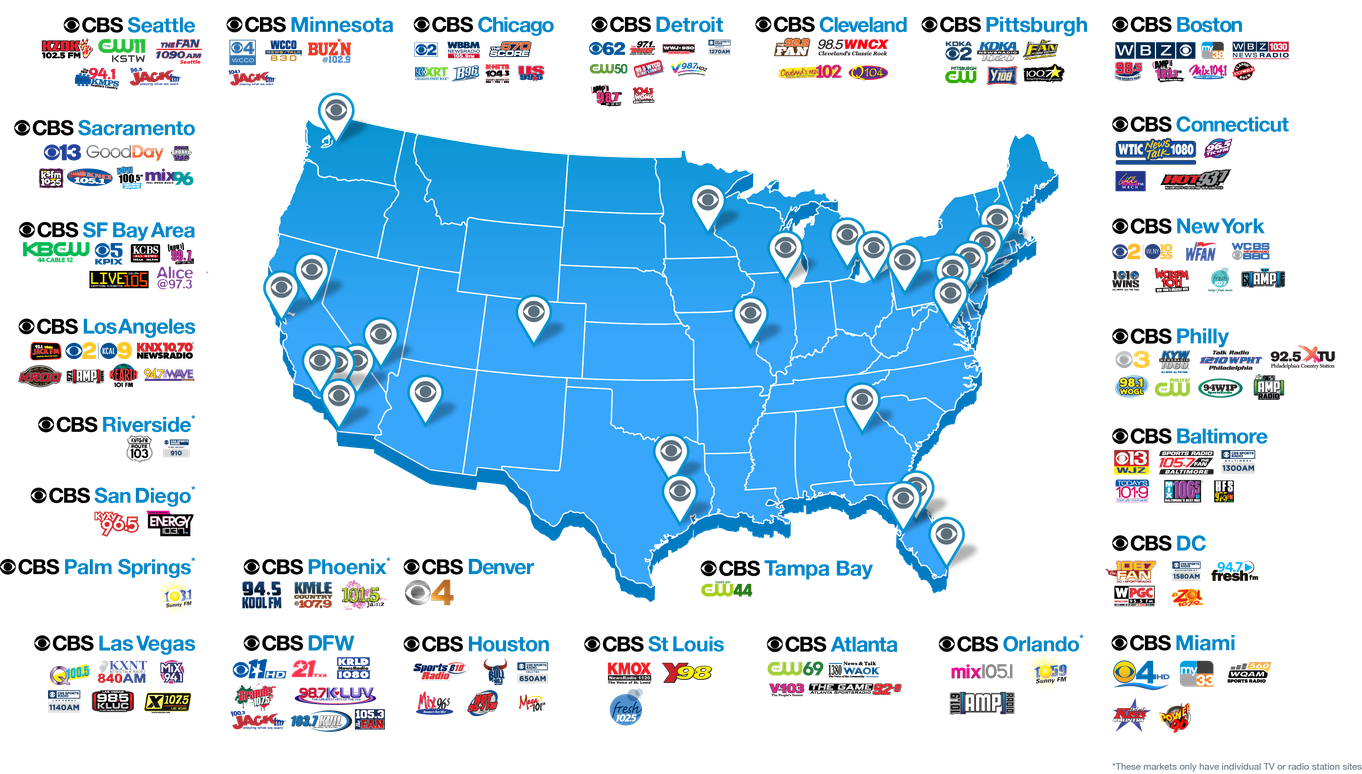
Not all local stations are created equal, and the paths ahead for network-owned stations and independently owned affiliates couldn’t be more different.
The public interest requires nothing less than the full realization of ATSC 3.0's commercial television potential before spectrum is diverted to enterprise applications.
If broadcast regulation truly needs reform — and it surely does — then retransmission consent must be on the negotiating table.
The local TV industry's long-held ad gatekeeping role is fading — and what replaces it will depend on how quickly broadcasters recognize both the risk and the opportunity.
The generational divide in how Americans consume “television” and TV news has never been more pronounced — or more consequential for the future of local media.
Today’s media economy increasingly favors “retail” or direct-to-consumer (DTC) models - yet local TV has almost no direct relationship with its audience.
Carrying C-SPAN could serve as a broadcaster bargaining chip in negotiations with the FCC, helping to secure favorable regulatory treatment such as relaxed ownership caps and support for the costly ATSC 3.0 transition.
Broadcasters cannot be both innovators and wards of the state.
Local
Proximity is the name of the game when it comes to local media.

