As regional sports networks (RSNs) collapse under the weight of cord-cutting, debt, and rights-fee inflation, one US broadcaster is quietly rewriting the playbook for local and regional sports distribution — and doing it over the air. Gray Media Group, through its emerging Gray Sports Networks (GSN) division, is proving that station groups can successfully revive and localize the RSN model, pairing broadcast reach with modern digital infrastructure.
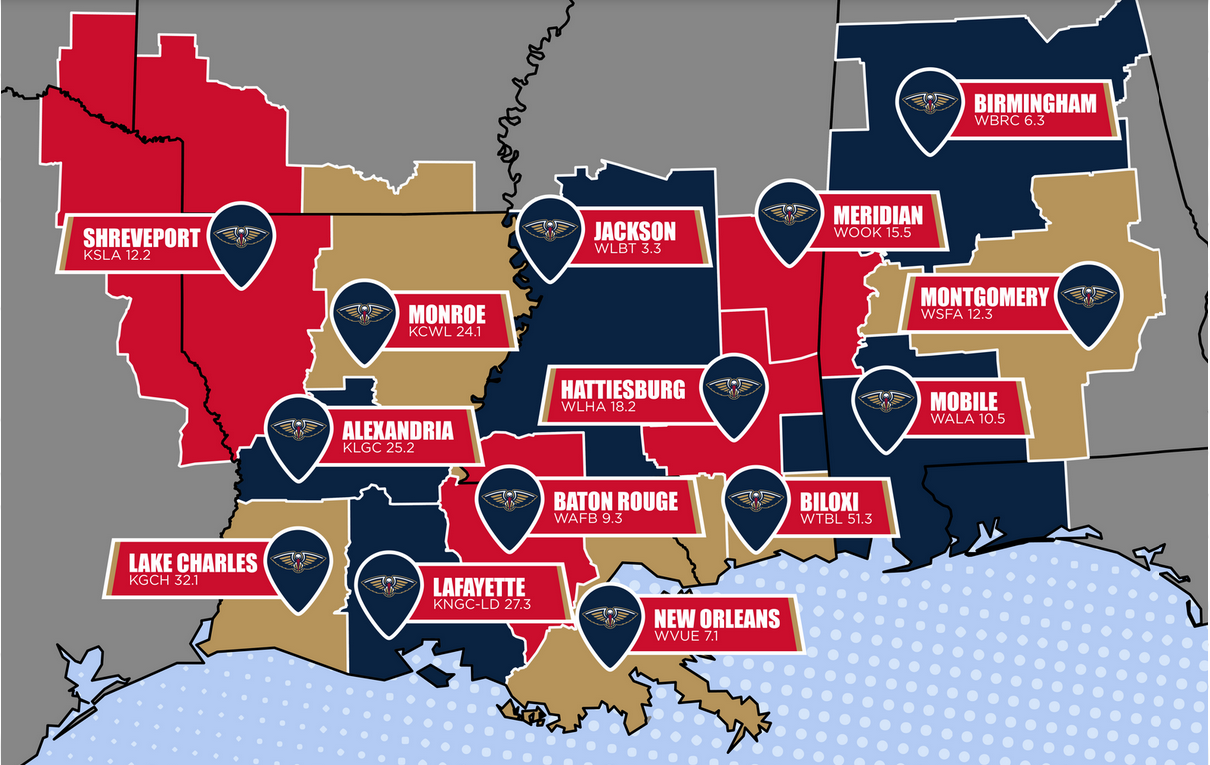
Its most visible proof of concept? Gray’s Gulf Coast Sports & Entertainment Network (GCSEN) — a growing regional multicast channel serving Louisiana, broad swaths of Alabama and Mississippi, and border counties in Texas, Oklahoma, Arkansas, and Florida — anchored by a broadcast partnership with the NBA’s New Orleans Pelicans.
From RSN Collapse To Broadcast Ingenuity
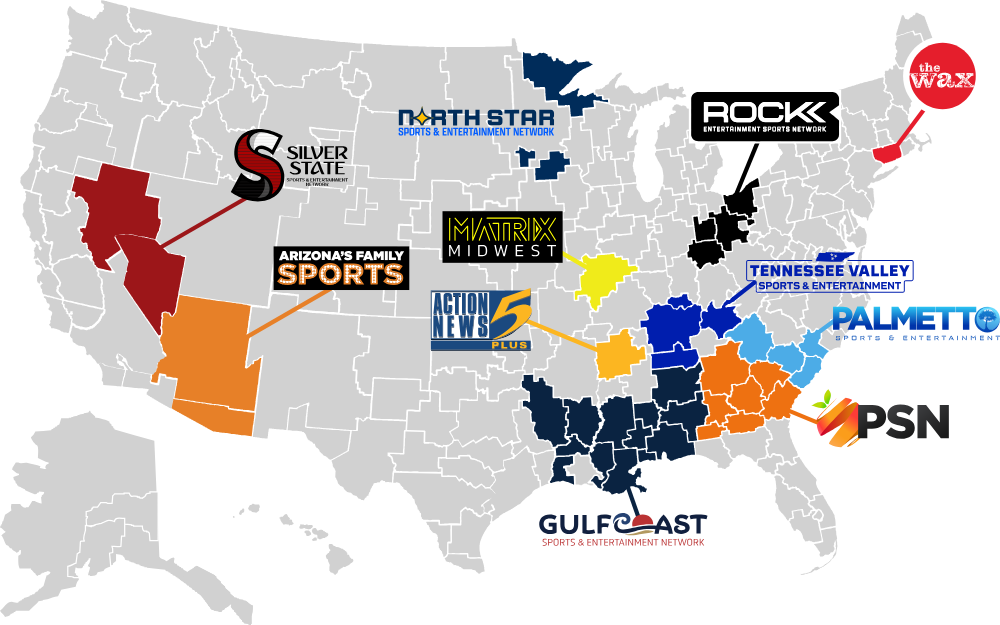
Regional sports media has been in free fall since Diamond Sports Group’s bankruptcy took down Bally Sports networks across the U.S., leaving dozens of pro basketball, hockey and baseball teams scrambling for local-game distribution. Gray saw opportunity in the wreckage. Rather than waiting for a new RSN operators to emerge, the company leveraged its 38-state-wide local broadcast footprint — roughly 114 markets and more than 180 stations — to deliver a new kind of regional sports experience built on free, over-the-air (OTA) access and locally produced content.
Gray Sports Networks was created to formalize that effort: a portfolio of de facto regional sports TV brands airing games and shoulder content from major, minor and fledgling leagues and local high schools across its multicast subchannels and digital platforms. Each regional network is tailored to its specific market, using existing Gray infrastructure — from production crews to local newsrooms — to deliver professional-grade coverage without the cost structure of legacy MVPD-delivered RSNs.
Gulf Coast As Flagship
The Gulf Coast Sports & Entertainment Network represents this concept at full scale. Launched in 2024, GCSEN broadcasts Pelicans games and other local sports programming on Gray digital subchannels like WVUE (New Orleans), WAFB (Baton Rouge), WLBT (Jackson), WLOX (Biloxi), WDAM (Hattiesburg), and WBRC (Birmingham), reaching a multi-state audience once served by cable-exclusive RSNs.
The programming lineup includes virtually every Pelicans home and away games this coming season (save for two on national NBA platforms), plus NOLA Gold (MLR) rugby, high school football, minor-league baseball, and regional entertainment programming. GCSEN has also achieved MVPD distribution wins, including enhanced carriage this season on DirecTV/U-verse, ensuring availability across both OTA and pay-TV platforms.
Most importantly, GCSEN restored accessibility. Fans no longer need a $100/month cable package to see their local team. As Gray has quickly learned with its other similar regional broadcast sports footprints across the country, viewership gains in early broadcasts demonstrate that when local sports return to free TV, audiences follow — and advertisers take notice.
The Business Logic
Gray’s approach to regional sports isn’t nostalgia for local broadcasting per se — but instead a savvy business reinvention born from situational awareness and ready resources. RSNs were subscription-dependent; broadcast sports networks are largely ad-driven, leveraging multicast bandwidth, local sales relationships, and station-group scale to deliver profitable sports coverage at a fraction of RSN costs.
Moreover, Gray’s model keeps content ownership and ad control in-house. Each affiliate contributes local production and promotion, while the Gray Sports Networks hub handles scheduling, rights coordination, and centralized ad operations. That allows Gray to localize or regionalize inventory for sponsors and better automate targeting across markets, akin to bespoke broadcast station “unwired networks” of yore.
The goal:“bring professional sports to your local market, free and accessible to everyone” — a message that resonates across a fragmented TV ecosystem where audience loyalty now depends on ease of access and local relevance.
The Potential Next Gen Multiplier
The strategic advantage deepens with the long-promised rise of ATSC 3.0 “Next Gen TV” — the IP-based broadcast standard enabling high-efficiency spectrum use, 4K resolution, enhanced mobile reception, and dynamic ad insertion. For group broadcasters like Gray, this technology transforms OTA distribution into a hybrid of linear broadcast and digital streaming.
With ATSC 3.0, a regional sports feed like GCSEN could deliver multiple camera angles, real-time data overlays, and even more localized/targeted advertising — even interactive betting or merchandise integration — directly through the broadcast signal.
Industry infrastructure is already forming to support that vision. Run3TV, a Next Gen TV application platform already backed by Gray and other major broadcasters (joined this week by NBCUniversal), is already enabling TV interactivity, personalization, and on-demand functionality within the ATSC 3.0 environment. Coupled with Gray’s (or any other sports-minded broadcaster’s) local production capabilities, such technology can turn a simple regional multicast feed into a dynamic digital ecosystem — effectively a “super RSN” that merges OTA reach with streaming-era interactivity.
Why It Matters
The implosion of the regional sports network model has left a vacuum — and with it, a tremendous opportunity for broadcasters to rethink their role in live sports distribution. The early success of Gray’s Sports Networks suggests that the path forward might not lie in chasing streaming giants, but in reimagining the strength broadcasters already possess: free spectrum, local trust, and deep production infrastructure.
What Gray has built hints at a scalable framework for regional sports in an increasingly post-RSN era — one that restores broad(er) accessibility for fans and reinvigorates the local advertising and sponsorship economy. The budding success of GCSEN and similar offerings like them (including some from Scripps and Sinclair) demonstrates that when local games return to free television, audiences and sponsors soon follow. But it also underscores how much untapped potential still exists for station groups willing to innovate beyond traditional DMA boundaries.
For broadcasters, the moment calls less for reinvention than for reinvestment — in spectrum, storytelling, and local connection. Gray may not have solved every problem left by the demise of RSNs, but it has charted a direction worth emulating. The opportunity now is for others in the broadcast TV industry to build upon that foundation and, together, redefine what “regional sports television” can mean - especially as a “Next Gen” world beckons.
Local News To Peruse
The Attention Economy Moved On, Local News Didn’t - Dak Dillon [NCS|NewscastStudio]
The State Of Local News: The 2025 Report - Zach Metzger, et al. [Northwestern|Medill Local News Institute]
They Took Big Pay Cuts To Run A Little Paper - Steven Kurutz, Cig Harvey [New York Times]
Nexstar Accused Of Using Customer Blackout As ‘Deal Leverage’ Ahead Of Verizon Contract Deadline - Jacob Bryant [The Wrap]
Carr Warns Broadcasters He's ‘Open To Idea’ Of License Revocation - Ted Hearn [Policyband]
How Funding Cuts Are Changing Public Radio - Brooke Gladstone [On The Media]
ATSC 3.0 May Be Closer Than Ever. How Will It Reshape Broadcasters’ Business Models? - Tom Sly [TVNewsCheck]
New Mexico PBS Brings ATSC 3.0 Multilingual Service To Viewers With HVS, Ateme, LingoPal - Phil Kurz [TVTech]