



The Future Of Television. Dissected Daily.

Tube Trends: The Curious Case of James Talarico
James Talarico’s late-night interviews have been moved to YouTube twice — and it may actually be helping the Senate candidate.
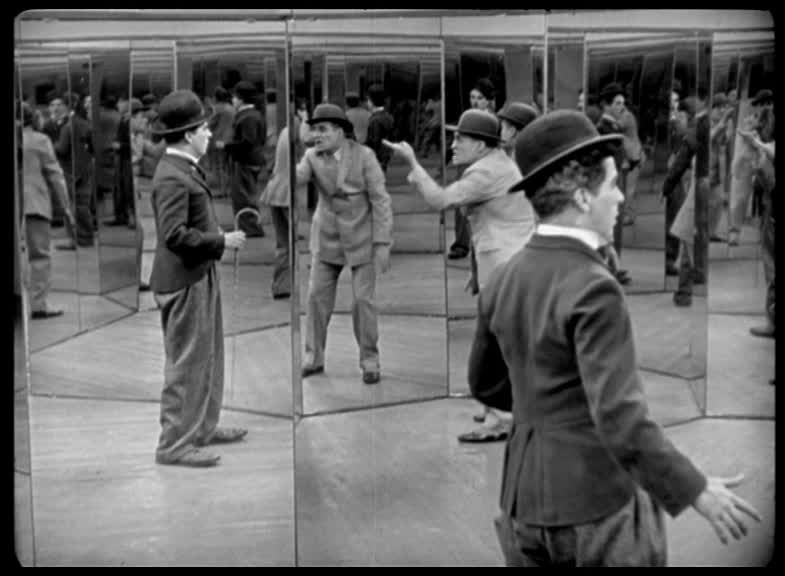
Broadcast TV’s Regulatory House Of Mirrors
The FCC spent years giving broadcasters reasons to invent complicated ways not to own stations, and is now giving them reasons to own those stations after all.
Can Local News Reinvent Itself For A Streaming-First World?
Media Inno Managing Partner Tom Sly joins Tim Hanlon this week on episode 23 of In the Vicinity.
AI Won't Replace Local Expertise—It Will Make It More Powerful
Madhive Chief Innovation Officer Aaron Brown joins Tim Hanlon this week on episode 22 of In the Vicinity.
FCC Opens The Door To Broadcast Consolidation. Will Local News Be Better For It?
TVND founder and former news director Kirk Varner joins Tim Hanlon this week on episode 21 of In the Vicinity.
Local TV Keeps Chasing Scale. But Is Transformation the Real Challenge?
Madhive CEO Jim Wilson is back on In the Vicinity this week to talk to Tim Hanlon about what the proposed FCC ownership rule changes could mean for local broadcasters.
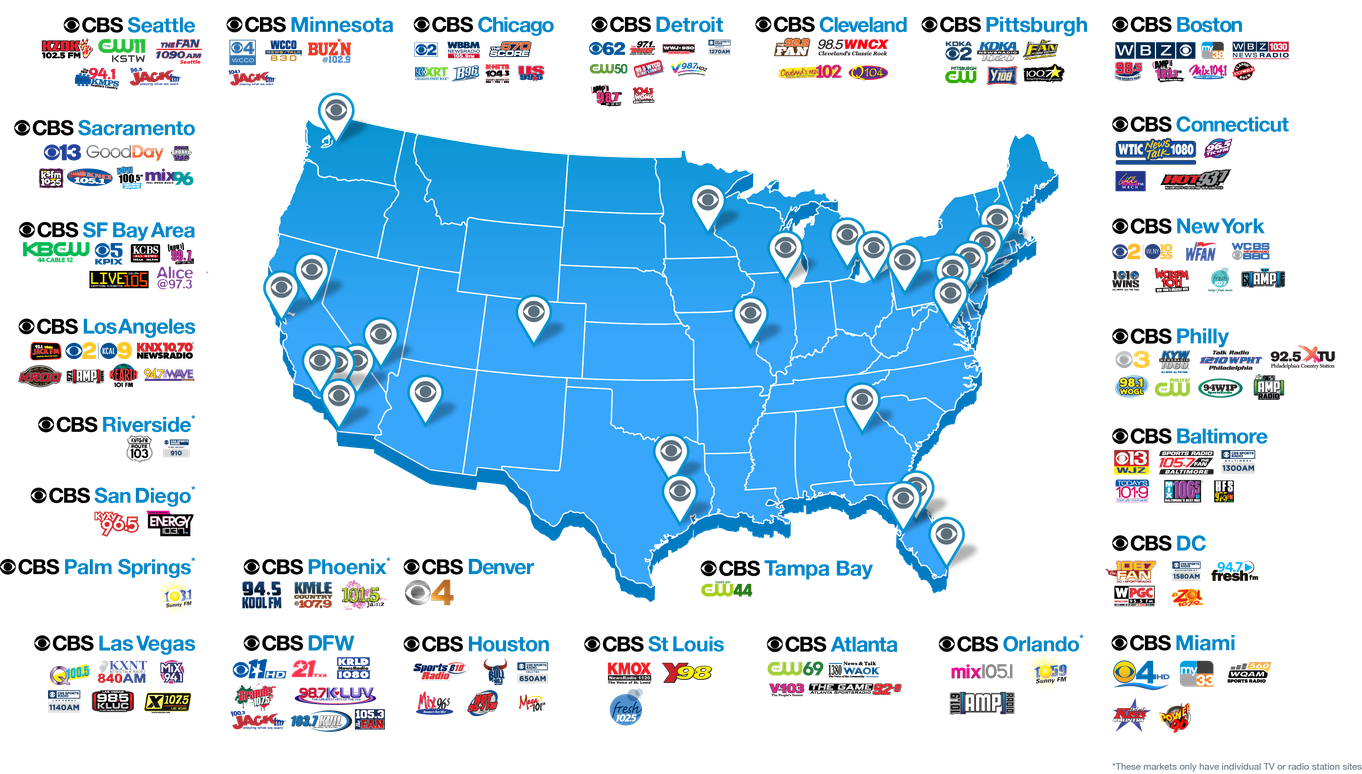
The FCC's Bigger Broadcast Ownership Question
Next week’s vote at the FCC is likely to replace a decades-old national TV broadcast station ownership cap formula with a substantially more subjective regulatory standard - and a whole new set of challenges.
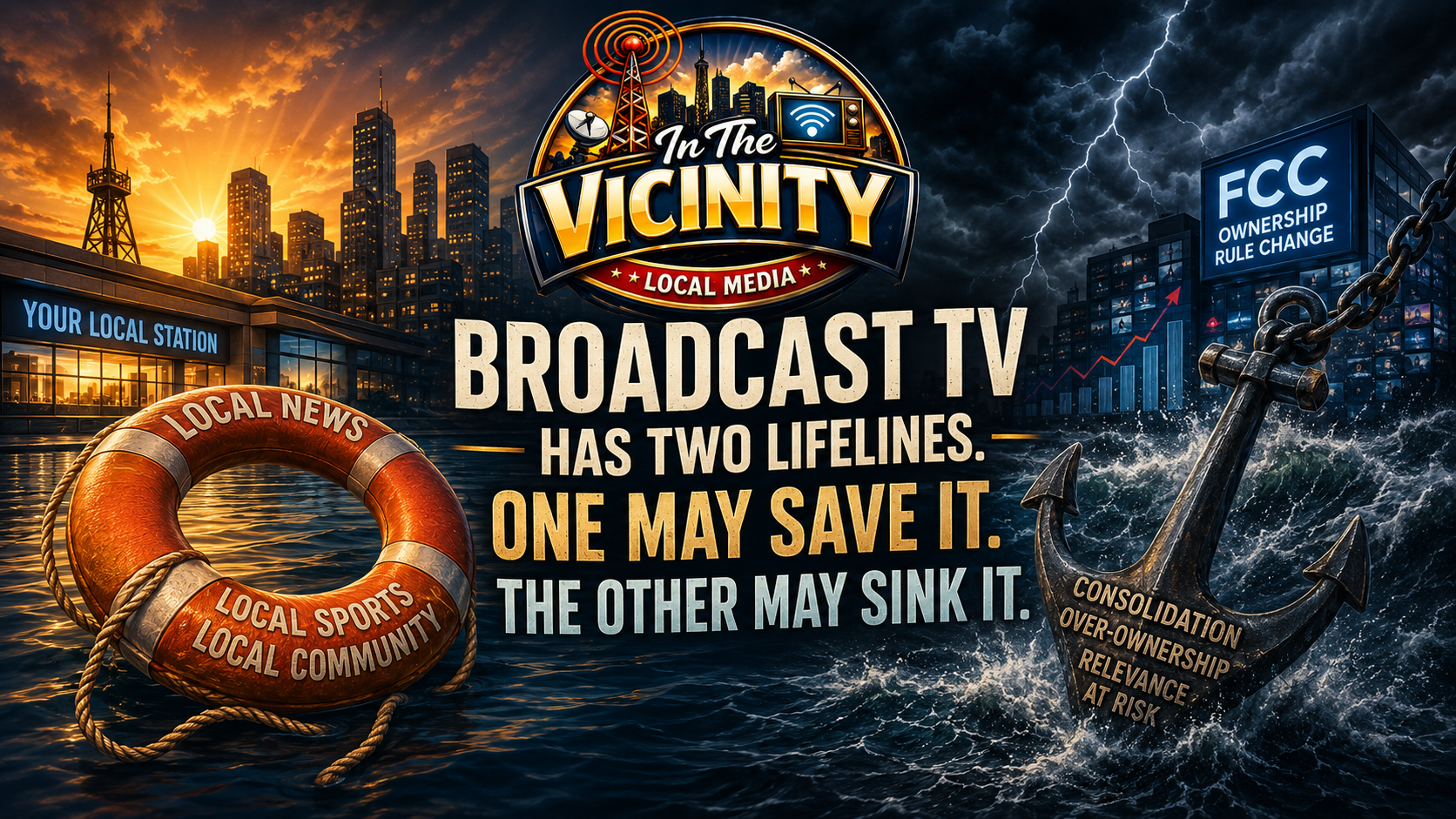
Broadcast TV Has Two Lifelines. One May Save It. The Other May Sink It.
Tim Hanlon goes solo this week on episode 18 of In the Vicinity.

The FCC Chairman’s Localism Paradox
The likely winners of FCC Chairman Carr’s proposed rule change are not the communities he invokes in his rhetoric.

NAB, Fox And Sinclair Play The News Card
Is a dedication to local news the real reason why the NAB, Fox and Sinclair are asking the FCC to stop the major sports leagues from heading to streaming?

Why FCC License Threats Over TV News Are Mostly Political Theater
The current administration’s political pressure against aimed at television journalism is real. But the regulatory system governing broadcast licenses has evolved in ways that make rapid, politically driven punishment extraordinarily difficult.

A Broadcast Ownership Exception — Or An Emerging De Facto Rule?
Is Indianapolis a narrow exception tailored to unique facts? Or is it an early indicator that triopolies — whether through ownership or ecosystem influence — are becoming normalized?

The ATSC 3.0 Deadline Debate Exposes Broadcasting’s New Fault Lines
The sharp divide — between most large commercial station groups on one side and public broadcasters, multichannel pay-TV providers, and small station owners on the other — reveals a classic regulatory clash: who bears the cost of progress, and who stands to profit from it?

Hot List: The Cost And Spoils Of Fragmentation
PLUS: Surviving the distraction economy, Alan Wolk’s Week in Review, and eliminating the FCC.

Eliminating The FCC (And Other Regulatory Fantasies)
Disbanding the FCC would not usher in a neutral, market-driven utopia. It would privatize governance, weaken accountability, and accelerate the erosion of already fragile media institutions.

Network O&Os Are From Venus; Affiliates Are From Mars
The distinction between owned-and-operated stations (O&Os) and network affiliates has never been more consequential — and with the FCC signaling openness to loosening ownership rules, it may soon determine which stations thrive and which struggle.

A Second Chance To Get Digital TV Right
Without enforceable accountability, the move to ATSC 3.0 risks becoming ATSC 1.0 “2.0” — another costly cycle of broken promises, obsolescence, and squandered public value.

How Carr’s Deregulatory Push Masks A More Perilous Power Grab
If Brendan Carr’s vision prevails, local TV risks becoming both homogenized and politicized — consolidated into a few large conglomerates, and pressured to avoid programming that might displease those in power.

The FCC’s Latest Broadcast Ownership Review: What’s At Stake
The real question is whether broadcast ownership rules written for a world of media scarcity can still make sense in a world of communications abundance.

From Public Interest To Corporate Compliance: The Erosion Of “KidVid”
“KidVid” rules were born of good intentions — to ensure children weren’t shortchanged by profit-driven commercial broadcasters. But three decades later, they’ve morphed into an outsourced compliance exercise dominated by a single producer.