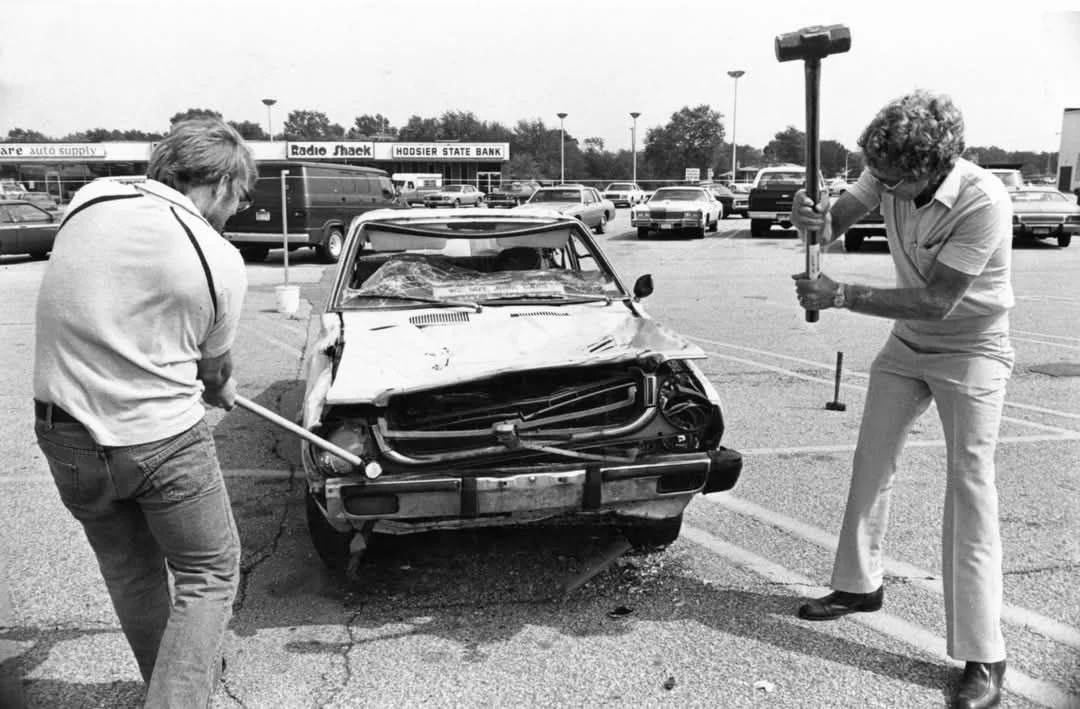
American autoworkers in the 1980s destroying a Japanese car.
There have been a spate of articles—a good half dozen—since Friday, mostly in the New York Times, decrying the Netflix-Warner deal as the death of Hollywood.
They are, at some level, correct that Hollywood As We Know It is dying, only the Netflix-Warner deal is not the culprit, but rather a side effect, one last gasp from a dying industry.
Because the fact is that Hollywood is being replaced by the Creator ecosystem, by YouTube, by TikTok and by the raft of soon-to-come AI tools that will allow anyone to create their own movie or TV show.
As such, the rants remind me of nothing as much as the complaints of the American auto industry in the 1980s as smaller, more fuel-efficient Japanese-made cars took over the market as consumers decided they no longer wanted the big tank-like gas guzzlers the industry was cranking out.
The articles are particularly disturbing, in that much as with the fall of Detroit, the victims are not the wealthy studio executives but rather the blue collar workers of Hollywood, the camera grips, the stunt doubles, the character actors.
It is always thus with systemic change and no amount of Timesian handwringing will put this particular genie back in its bottle.