While TV ad reach is shrinking overall — down 5.54% year-over-year in 1H 2025, according to a new report from iSpot — you can also find plenty of increases across TV.
For instance, streaming’s share of TV ad impressions have actually climbed from 14.76% (vs. national linear) in January 2025 to 19.48% in June, per iSpot’s sample of 50 top brands. National linear spend is also up 3.29% year-over-year to $21.85 billion, which is at least partly tied into the observed 3.16% TV ad reach increase during Big 4 primetime programming.
So where are the increases coming from? To perhaps limited surprise, a lot of it is fueled by live sports.
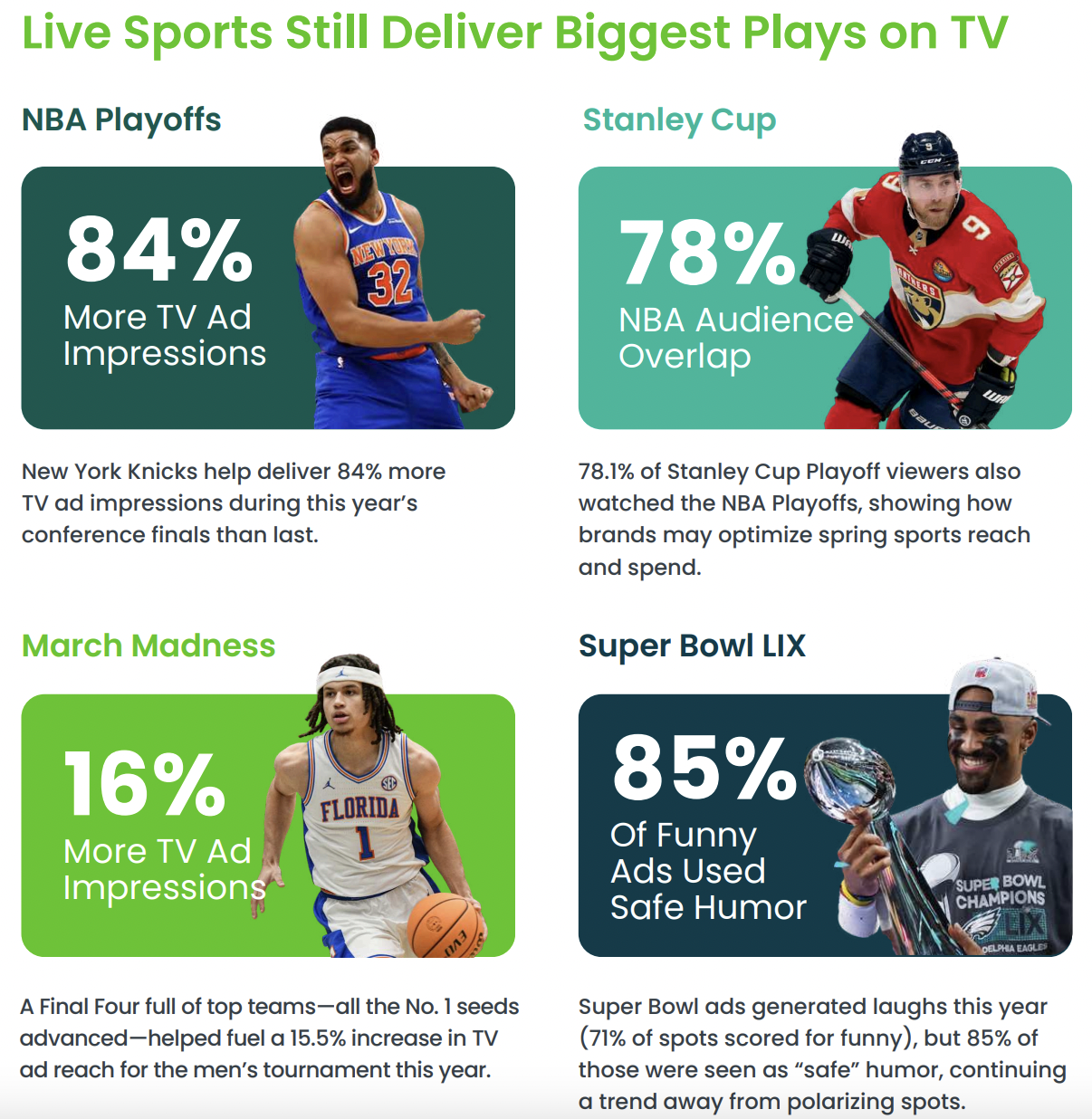
As previously discussed, the NBA Playoffs paid off significantly for TV advertisers this year despite the “small market” allegations. That year-over-year reach increase during the postseason helped fuel the NBA’s 9.6% year-over-year ad impressions climb during the first half of 2025. Men’s college basketball also cashed in on bigger teams advancing, as the sport grew ad reach by 11.6% vs. the first half of 2024, too.
Overall, iSpot found that four of the top 10 programs by TV ad impressions were sports-related, as were six of the top 20. But it wasn’t all sports either, at the top.
Syndicated programming like The Big Bang Theory saw TV ad reach soar by 48% year-over-year as the show expanded the number of networks reruns appeared on. News-related programming also saw growth across a variety of networks, and those shows made up five of the top 20 by ad impresssions.
iSpot also quantified plenty around how brands are advertising on TV — and changing how they’re measuring success to get the most out of ad placements.
Interestingly, numerous brands were among the top 10 by both national linear TV ad impressions and streaming ad impressions. But plenty were more focused on streaming relative to overall TV ad reach SOV. For instance: Hyundai accounted for 0.79% of brand TV ad impressions on streaming (No. 3 overall), but 0.39% on national linear (No. 18). Chick-fil-A was No. 5 on streaming, but No. 26 on national linear. Taco Bell was No. 14 on streaming, but only No. 100 on national linear TV.
While brands are still able to find plenty of value in the broad reach that national linear TV ad campaigns provide, they’re also seeing the upside of streaming’s targeting capabilities; something that has particular interest for all advertisers, but especially those in industries like QSR, automakers and retail, with larger local plays.
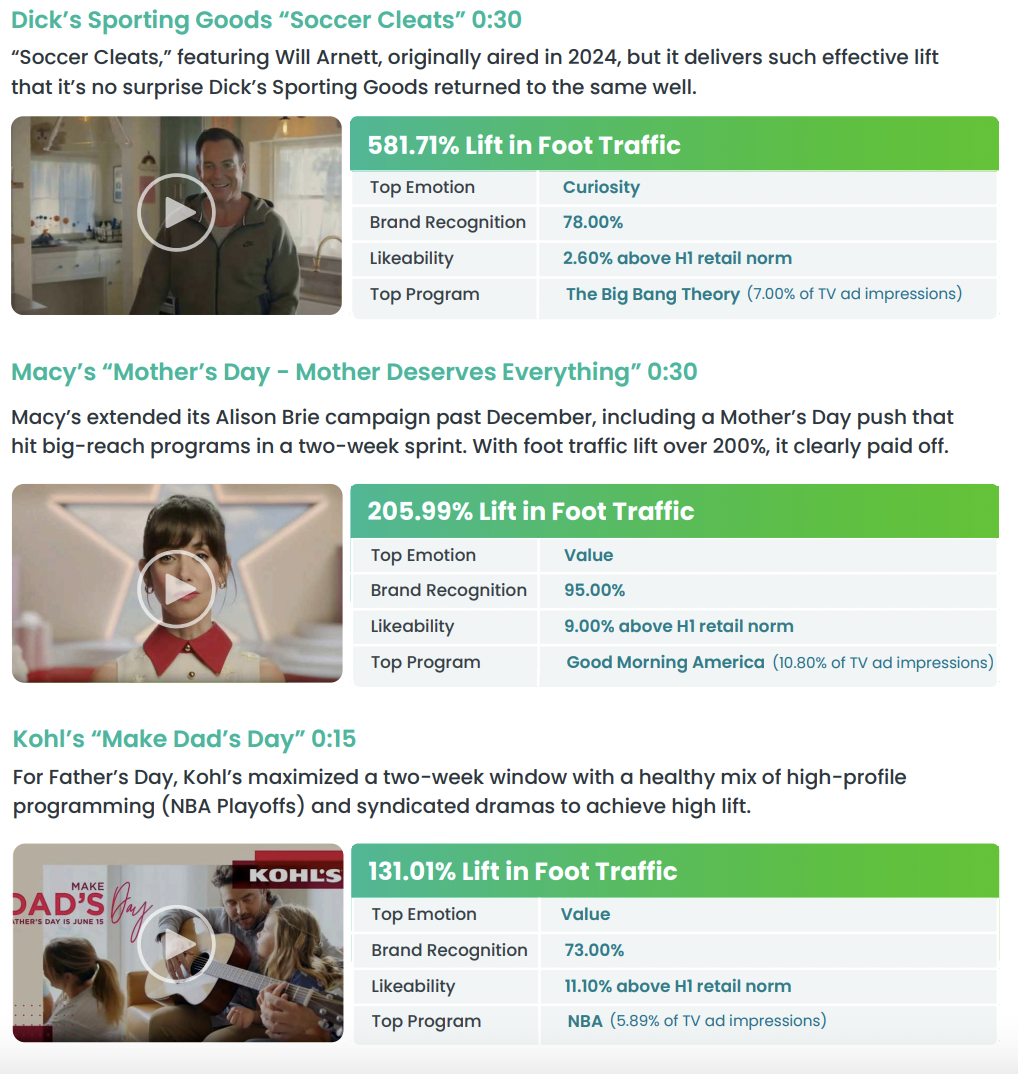
To that end, iSpot is also able to provide details on which ads correlated to the largest foot traffic lifts. The retail spotlight below shows top ads from retail advertisers like Dick’s Sporting Goods, Macy’s and Kohl’s which resulted in increased lift for in-store shopping (and where those ads appeared most).
What will be most interesting to watch across TV is how these larger trends continue — or don’t — across the second half of 2025. Streaming typically rises in summer without as much appointment television or sporting events, but will it decline come fall once football (still a strong source of linear TV viewing) returns?
And given the consolidation of TV ad reach around top networks and programming (namely, broadcast networks, sports, news programs), how long can cable sustain losses. We may already be getting the answer there — and it’s “not long” — when you see headlines like E! News getting cancelled, which could portend further consolidation.
In any case, having transparent ad data to quantify the shifts remains crucially important for brands and the industry at large.