The Real Battle in Premium & Social Content: Reach vs. Activation

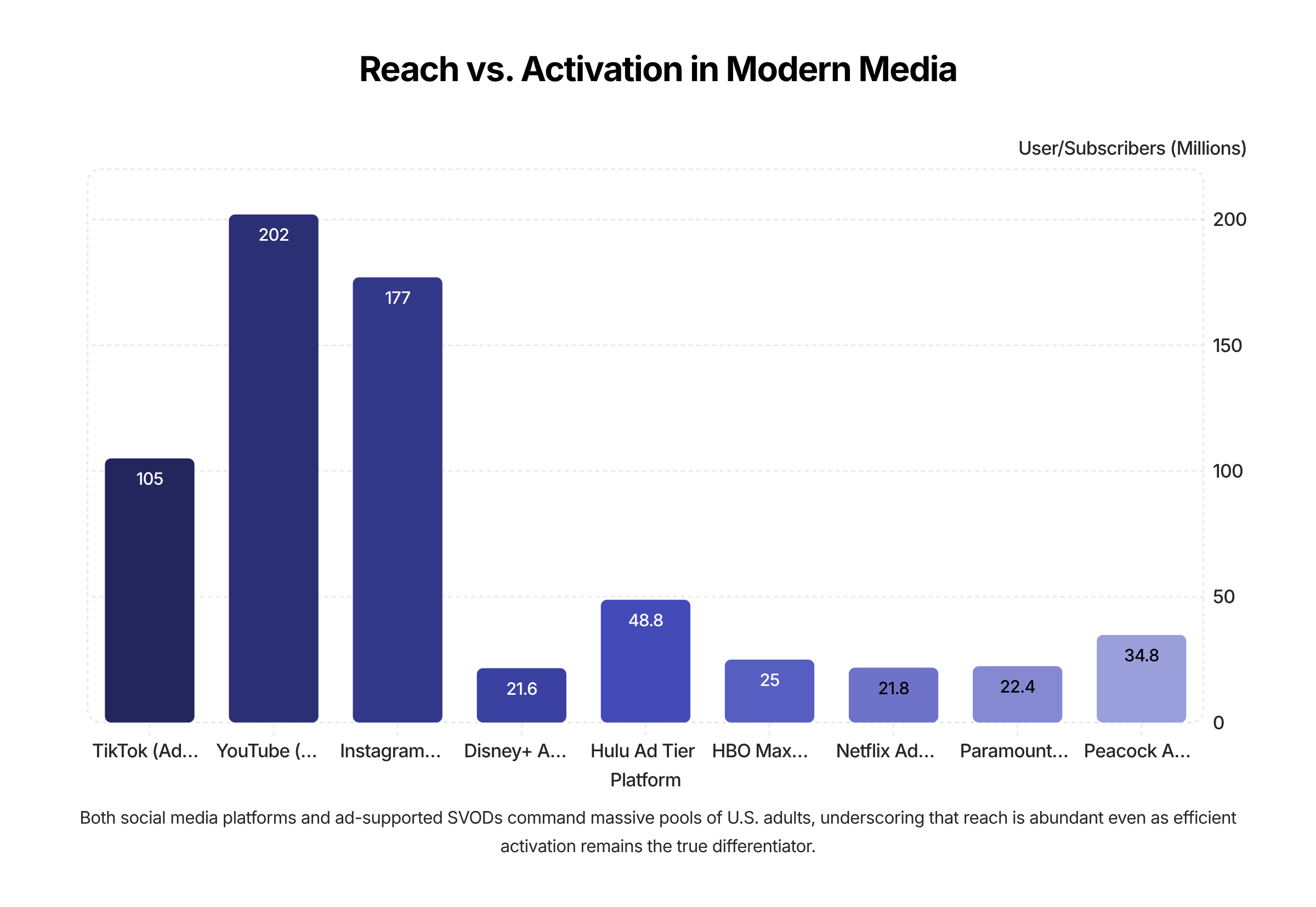
There are more than 202 million adult (18+) YouTube users, 177 million adult Instagram users and 105 million adult TikTok users in the U.S., according to Greenlight Analytics data. Huge ad-supported social video platforms colliding with massive pools of potential audiences. That’s especially opportunistic for creators with tens of millions of engaged followers that can be activated beyond social media, as Markiplier recently did for the shockingly successful Iron Lung ($43.7 million and counting at the global box office versus a $3 million budget). While that film’s performance is the exception to the rule—and it will remain very difficult to translate social media success to another medium—many creators still harbor aspirations in traditional film and television. Yet they enter a constantly evolving landscape grappling with broad precision.
Followers of creators are often younger, valuable audiences. Iron Lung and Chris Stuckerman’s Shelby Oaks bow saw audiences under 35 outpace the 35+ demographic in Awareness, Interest, Theatrical Intent, and Willingness to Pay a Fee (theatrical ticket, VOD transaction, sign up to a streamer to watch), per Greenlight. Alan Chikin Chow and Dhar Man Studios are two examples of YouTube-backed creators already delivering traditional sitcom-esque scripted content on the platform.
The same scale dynamic exists across premium streaming, where ad-supported is growing increasingly critical to the bottom line alongside social video. Greenlight Analytics estimates strong numbers of U.S. adult ad-supported streaming subscribers across the major services: Disney+ (21.6M), Hulu (48.8M), HBO Max (25M), Netflix (21.8M), Paramount+ (22.4M), and Peacock (34.8M). Naturally, there is still broad reach to be found by advertising across general entertainment platforms. Shotgun awareness has its perks in select circumstances. But the media ecosystem is becoming increasingly fragmented with niche sub-communities arising more frequently. Microtargeting across both social and “premium” is proving more and more efficient.
Monolithic brands are struggling to generate as much heat as consistently they once were. Disney is responsible for four of the 10 highest Theatrical Intent scores from 2021-Present, per Greenlight, and boasts the only $1 billion-plus movies of 2025. But we’ve seen the studio’s Intent Conversion (Theatrical Intent divided by Awareness, a measure of how efficiently marketing is convincing audiences to go to theaters for a given title) for the MCU and select Disney tentpole features suffer compared to the two years prior. The stability of the Mouse House’s output has grown more volatile.
As Warner Bros. continues to be passed around like a hot potato, HBO continues to be tasked with telling more broad appeal IP-driven stories. Casey Bloys and his team seem to have mastered the ability of going big without going overboard. HBO has elevated superhero material, carefully franchised Game of Thrones, legitimized the video game genre as a prestige play, deliberately programmed for younger and more female audiences to great success, and nurtured full-fledged commercial hits out of esoteric creator-driven dramas. Programming has maintained its premium sheen, but balanced broad appeal.
Will the creators of tomorrow be able to migrate and monetize their audiences elsewhere? Can legacy studios and platforms adapt their programming and marketing strategies to a more siloed world? Taken together, the numbers point to a simple reality: massive audience pools exist across social and premium content platforms. But translating reach into efficient activation—whether in theaters, on streaming, on social, or in advertising—remains the central challenge defining content’s next phase.