The End Of The RSN Era Has Begun — But Leagues Don’t Agree On What Comes Next
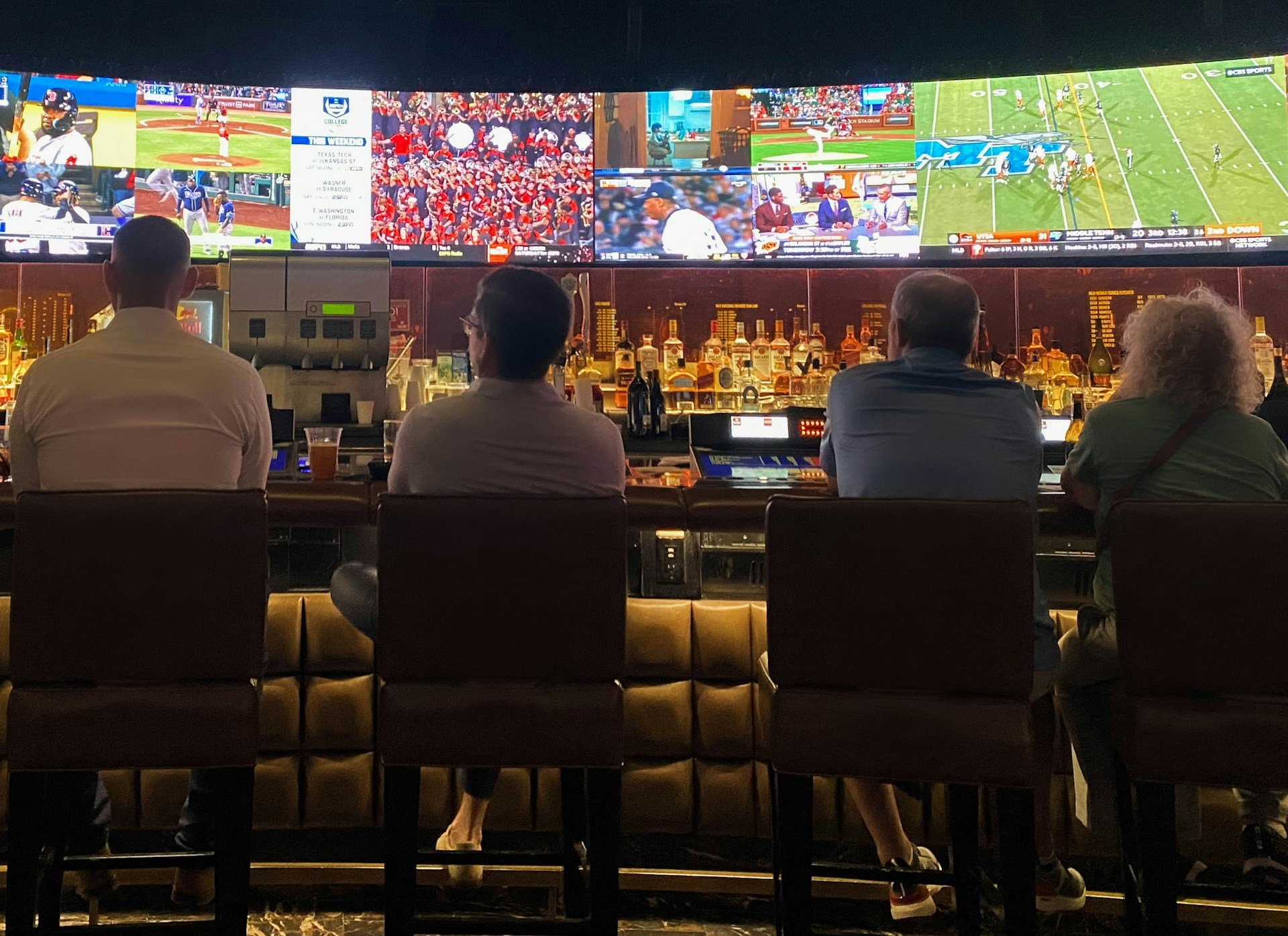
Amit Lahav (via Unsplash)
For more than three decades, the regional sports network was one of the most reliable economic engines in American television.
Local teams signed long-term rights deals worth hundreds of millions of dollars. Cable and satellite providers paid lucrative per-subscriber carriage fees. RSNs, in turn, delivered wall-to-wall local games that were often the most consistently watched programming in a market.
It was a remarkably durable model — until it wasn’t.
Cord-cutting has steadily hollowed out the traditional pay-TV bundle that made RSNs so profitable. Distribution footprints have shrunk. Subscriber revenue has fallen. And the bankruptcy and restructuring of RSN giant Diamond Sports Group made clear what many in the industry had quietly suspected for years: the regional sports network business is no longer structurally sustainable in its traditional form.
Some RSNs are attempting to adapt by launching direct-to-consumer streaming services and forming partnerships with digital platforms. But even these efforts underscore the broader challenge: replacing the massive subscriber revenue once generated by the cable bundle remains extraordinarily difficult.
What replaces the old system is far less clear. But one thing is certain: the major leagues are now actively experimenting with new models for local media rights.
The intriguing part is that they are not pursuing the same strategy.
In fact, the three leagues most exposed to the RSN system — Major League Baseball, National Basketball Association, and National Hockey League — are each heading in different directions.
That divergence may shape the next decade of sports television.
Baseball Moves Toward Centralization
Among the leagues, Major League Baseball is arguably pursuing the most ambitious structural change.
For decades, MLB teams controlled their local media rights individually, striking lucrative deals with regional networks across the country. The result was a patchwork system where television access — and team revenue — varied widely from market to market.
The RSN upheaval has forced the league to reconsider that model.
Over the past two seasons, MLB has already stepped in to produce and distribute games for clubs whose RSN partners collapsed or surrendered rights. In doing so, the league has quietly demonstrated that it can function as a centralized producer and distributor of local games.
A long-term vision increasingly discussed around the league is a future in which MLB could aggregate local rights across teams and markets, allowing the league itself to control how those games are distributed nationally and digitally.
If that happens, it would mark a dramatic shift.
Local baseball rights — long the most decentralized property in sports media — could eventually become a centrally managed product.
In other words, baseball may be trying to build a system that looks less like the old RSN marketplace and more like the nationalized distribution model long used by the NFL.
The NBA Experiments With A Streaming Hub
The strategy emerging from the National Basketball Association is notably different.
Rather than fully centralizing local rights, the NBA has explored the possibility of a national streaming hub that could aggregate local broadcasts from multiple teams on a single platform.
The concept resembles an expanded, in-market version of the league’s existing out-of-market streaming product. Under the proposal, a technology or media partner could distribute dozens of teams’ local games through one centralized service.
Such a platform would allow the NBA to maintain the current system of team-controlled rights while simplifying distribution for consumers.
It would also acknowledge an uncomfortable reality for the league: RSNs are no longer guaranteed to provide the wide distribution they once did.
In response, several NBA teams have already begun experimenting with hybrid models that combine direct-to-consumer streaming with expanded over-the-air broadcasts.
In markets where RSN reach has collapsed, some teams are suddenly appearing on free broadcast television for the first time in decades.
The league’s proposed hub could ultimately stitch together these fragmented approaches into a unified digital marketplace.
The NHL Takes A More Cautious Path
The National Hockey League, by contrast, appears far less eager to dismantle the existing system.
Commissioner Gary Bettman has repeatedly indicated that the league prefers a mixed model for local rights, allowing teams to continue negotiating their own arrangements across RSNs, streaming platforms, and broadcast stations.
In part, that reflects the reality that some hockey markets still have stable and profitable RSN agreements.
Rather than rushing toward centralization, the NHL appears content to extend the life of the regional model where it still works, while allowing teams flexibility to adapt where it doesn’t.
If MLB represents structural reinvention and the NBA represents digital experimentation, the NHL’s strategy could best be described as pragmatic continuity.
A Surprising Opportunity For Local Broadcasters
Lost in much of the industry discussion is the role of traditional broadcast television.
For decades, local stations largely disappeared from professional sports distribution as teams migrated to RSNs and pay-TV exclusivity.
Now, they’re suddenly back in the conversation.
Across multiple markets, teams have begun placing games on local broadcast stations — sometimes simulcast with streaming services, sometimes as part of broader hybrid packages.
For broadcasters, this has created an unexpected opening.
Sports remain among the few programming categories that reliably attract large live audiences. In an era when entertainment viewing continues shifting to streaming, local games offer stations something increasingly rare: appointment television with strong local identity.
For groups that operate clusters of stations within a state or region, there is even the possibility of building mini-networks capable of distributing games across multiple markets.
In the short term, the RSN disruption has effectively turned broadcast television into an emergency distribution partner for professional sports.
But The Economics Still Don’t Work
Yet there is a reason RSNs became dominant in the first place.
The traditional cable bundle generated enormous subscriber revenue that broadcast television simply cannot replicate.
RSNs historically collected monthly carriage fees from every pay-TV household in a market, whether those viewers watched sports or not. Those fees — often several dollars per subscriber — created the financial foundation for the massive rights payments teams came to expect.
Broadcast stations rely primarily on advertising revenue, supplemented occasionally by modest rights fees or sponsorship packages.
Even with strong ratings, that economic model is unlikely to replace the scale of revenue that RSNs once generated.
Which means the recent surge of games returning to broadcast television may represent something closer to a transitional solution than a permanent one. Broadcast stations can offer reach and visibility, but replicating the enormous subscriber revenue once generated by the cable bundle remains extraordinarily difficult.
The Shape Of The Next Era
If the RSN system is fading, the replacement will almost certainly be more fragmented — and more digital.
Major League Baseball appears to envision a future where the league itself aggregates and controls local rights.
The National Basketball Association is experimenting with a centralized streaming marketplace that could unify distribution without fully nationalizing rights.
The National Hockey League is trying, at least for now, to extend the life of the existing system where it still works.
All three paths reflect the same underlying reality: the old RSN model is no longer the stable economic foundation it once was.
For local broadcasters, the moment offers a rare opportunity to reenter the sports landscape. But the window may prove narrow.
The next era of sports distribution will likely be defined by streaming platforms, league-controlled distribution, and national digital aggregators. If that future takes hold, broadcast stations may once again find themselves playing a familiar role in the sports television ecosystem:
Valuable partners in distribution—but no longer the center of it.
Listen To Episode 2 Of “In The Vicinity”
Local News To Peruse
States Prepare Challenge To Major Broadcast TV Deal - Dave Michaels & Dana Mattioli [Wall Street Journal]
Leading Union At Nexstar-Owned TV Stations Plans Shareholder Battle - Alex Weprin [Hollywood Reporter]
The 65-Year-Old Law That Still Shapes How You Watch Sports - Jeffrey Westling & Ben Sperry [Truth On The Market]
Concerns Arise Over Local Ad Inventory With NFL, Other Sports League Deals - Wayne Friedman [MediaPost]
Gray Stresses Importance Of DRM For NextGen TV In FCC Sports Probe - George Winslow [TVTech]
Bob Costas Suggests MLB Work Toward Providing Fans With Local Calls On National Games - [Barrett Media]
On Standing Rock, Local News Is Teetering - Liam Scott [Columbia Journalism Review]
AP Fund For Journalism Expands Landmark Local News Program To 100 Newsrooms - [AP Corporate Communications]