From Stations To Brands: How The Duopoly Is Rewiring Local Television
In the long history of American local television, the duopoly has always been something of a broadly accepted structural compromise — important to operators, largely invisible to viewers, and often discussed in regulatory rather than strategic terms. It is a construct born of FCC ownership-rule relaxation, justified by economies of scale, and traditionally understood as a way to stabilize declining margins in a fragmenting advertising market.
That framing is now beginning to feel dated.
The Duopoly Was Never The Story — But It May Be Now
Across several major station groups, the duopoly is being repurposed — not as a back-office efficiency play, but as the scaffolding for something closer to a unified local media brand. What is emerging is not simply “two stations under one owner,” but increasingly “one local franchise expressed across multiple broadcast and digital outlets.”
The shift is subtle in execution but significant in implication.
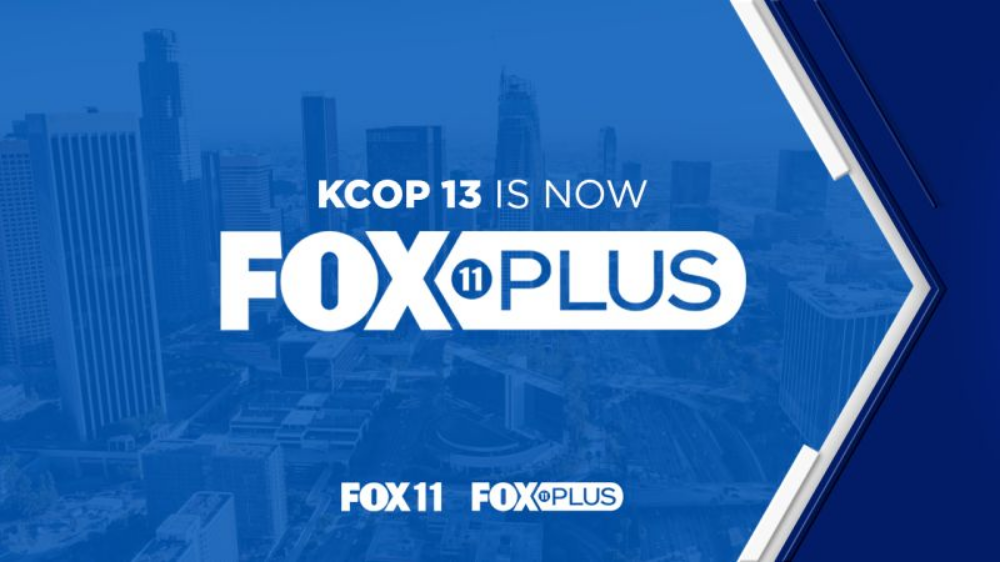
Start with Fox Television Stations, where the logic is perhaps most visually explicit. In markets like Los Angeles, Washington, Minneapolis, and Orlando, Fox has effectively absorbed its secondary MyNetworkTV stations into the identity of the primary Fox affiliate. KCOP in Los Angeles is no longer meaningfully presented as a standalone brand; it is “Fox 11 Plus.” WDCA in Washington is “Fox 5 Plus.” WFTC in Minneapolis has become "Fox 9+.” The nomenclature itself reveals the strategy: the second station is not competing for identity, but extending it.
This is not merely cosmetic. It is a redefinition of what a second station is for. Rather than serving as a separate programming destination, it becomes incremental bandwidth for the core brand — another way to deliver local news, sports overflow, specials, and time-shifted content under a unified identity umbrella. The implication is that viewers are not expected to maintain two relationships; they are expected to deepen one.
From Station Identity To Local Brand Architecture
CBS’s duopoly strategy, while less syntactically uniform, moves in a similar direction through a different conceptual path. In major markets such as Los Angeles (KCBS/KCAL), Dallas (KTVT/KTXA), New York (WCBS/WLNY), and Philadelphia (KYW/WPSG), CBS has increasingly elevated the “CBS News [Market]” identity above individual station branding. KCAL and KCBS operate less as discrete stations and more as components of “CBS News Los Angeles.” In Dallas, KTXA functions as an extension of “CBS News Texas.” The organizing principle is no longer the station — it is the newsroom as the franchise.
This shift is important because it relocates value. In the traditional model, value resided in the station license and its channel position. In the emerging model, value resides in the production engine — the newsroom, the brand, the digital ecosystem — and the stations become distribution layers within that system.
Then there is Phoenix, where Gray Media’s “Arizona’s Family” represents perhaps the most fully realized version of this transformation. Here, the duopoly structure is not just being optimized; it is being transcended. KTVK and KPHO are still technically distinct stations, but operationally and increasingly experientially, they are expressions of a single brand architecture. Arizona’s Family now spans broadcast news, weather, digital platforms, streaming products, and sports content under a unified identity.
Leveraging Local News, And Now Sports
The addition of “Arizona’s Family Sports” — alongside high-profile local rights such as the NBA’s Phoenix Suns and WNBA’s Mercury — pushes the model further still. What was once a pair of stations becomes a multi-platform regional media network, with sports acting as both content engine and distribution accelerant. The key development is not simply that sports are being added, but that they are being absorbed into the same brand structure as news and weather.
Taken together, these examples suggest that the duopoly is being quietly reinterpreted as a “capacity solution” for a post-channel world. Where once a second station was a programming overflow valve, it is now increasingly a mechanism for multiplying the output of a single local brand across more hours, more platforms, and more audience touchpoints.
Not every operator has moved in this direction at the same speed or with the same clarity. Scripps' Kansas City duopoly — KSHB (NBC) and KMCI ("38 The Spot") — is instructive precisely because it has resisted a complete brand merger. While KMCI is operationally integrated with KSHB, it still maintains a distinct on-air identity, and "38 The Spot" continues to function as a separate local entertainment brand rather than simply an extension of the primary station's news brand. Yet, beneath that surface separation, the operational reality is far more integrated: shared sales, shared infrastructure, coordinated digital strategy, and increasingly unified product packaging for advertisers. It is a reminder that brand separation and business integration can coexist — but also that economic logic continues to pull toward convergence.
From Spare Channel To Strategic Asset
What is most striking across these models is not uniformity, but directional consistency. Whether through Fox’s “Plus” architecture, CBS’s newsroom-centric branding, Gray’s franchise model in Arizona, or even Scripps’ partially retained dual identity, the same underlying reorientation is visible: away from station-centric thinking and toward brand-centric thinking.
This reorientation reflects a deeper structural truth about the current media environment. The scarcity that once defined local television's distribution model — limited channels, controlled distribution, fixed tuning behavior — has largely evaporated. Viewers no longer arrive through channel navigation; they arrive through apps, aggregators, search, and algorithmic feeds. In that world, the unit of competition is no longer the station. It is the brand.
As viewing migrates toward streaming apps, FAST channels, connected-TV platforms, and social video, station groups increasingly need a consumer-facing identity that transcends a channel position. A viewer may know Arizona's Family, CBS News Texas, or Fox 11 without ever knowing the underlying call letters or virtual channel numbers. The economic value of the station remains intact, but the consumer relationship increasingly resides with the brand.
And yet, local broadcasters retain something that most digital-native competitors do not: physical presence in markets, institutional trust built over decades, and direct participation in civic life through weather emergencies, local politics, school systems, and community sports. The strategic question is whether those advantages can be preserved — and monetized — without the old channel-based architecture that once supported them.
The emerging duopoly model suggests one possible answer. It allows station groups to retain regulatory and operational scale while reorganizing themselves around a single local identity that can travel across platforms. One newsroom can increasingly be packaged as a unified content engine feeding multiple broadcast signals, multiple streaming channels, multiple social outputs, and multiple sports partnerships. The second station becomes less a separate business and more an extension engine for that ecosystem.
If this trajectory continues, the most important shift in local broadcasting may not be technological at all. It may be conceptual: the slow replacement of “station ownership” with “local brand stewardship.”
In that sense, the duopoly is no longer just a structural artifact of FCC policy. It is becoming a transitional form — one that hints at what local television might become when it finally stops thinking of itself as a collection of stations, and starts behaving like a single, adaptive local media network.
Local News To Peruse
DirecTV And Scripps Locked In Retransmission Battle, As 54 Local TV Stations Go Dark On The Service Across 36 Markets - Michael Schneider [Variety]
Will Must-Carry Make It To NextGen TV? - Gary Arlen [TVTech]
Charlie Ergen's SPAC Moves To Take Over HC2 Broadcasting - Jeff Baumgartner [Light Reading]
MLB Salary Cap Proposal Would Centralize Local TV Revenue, End Blackouts - Sam Neumann [Awful Announcing]
NBA Hires Matt Volk To Newly Created Local Media Position - Sam Neumann [Awful Announcing]
Arizona’s Family Launches Single App For Suns And Mercury - Tom Friend [Sports Business Journal]
Hubbard Radio Announces Rebrand Of ‘Media That Connects’ - John Mamola [Barrett Media]
Axios Bets That AI Can Make Local News Pay, One Market At A Time - Mark Stenberg [Adweek]
With Monitor Local, The Maine Monitor Expands To Civic News - Written By Local Residents - For Rural Counties - Sophie Culpepper [NiemanLab]