The Billion-Dollar Sandbox: Why Disney’s Deal With OpenAI Is The “Netflix Moment” For GenAI
The news that Disney is investing $1 billion in OpenAI and licensing its vast library of characters for use in Sora and ChatGPT marks a seismic shift in the entertainment landscape. For years, the narrative has been one of resistance—lawsuits, strikes, and fears of displacement. But with this partnership, the Mouse House has signaled a new strategy: if you can’t beat the machine, feed it… but on your own terms.
This deal isn't just about Mickey Mouse generating a video prompt. It’s the blueprint for the next era of intellectual property.
Here’s my strategic take at what this means for fans, developers, and the future of the media business.
Democratized (Yet Controlled) Creativity
For fans and StoryWorld developers, the integration of Disney IP into Sora is nothing short of a dream realized. We are moving from passive consumption to active co-creation. The ability to generate high-fidelity scenes with official assets—Spider-Man, Elsa, or Darth Vader—democratizes the high-budget "magic" that was previously locked behind studio gates.
However, the key word here is controlled. Unlike the "Wild West" of early AI generation, this is a walled garden. By officially licensing the "Brand Object data model"—the specific look, feel, and physics of their characters—Disney ensures that the output remains on-brand. It’s a masterclass in governance: giving the fans the keys to the car, but programming the GPS so they can’t drive off a cliff.
The Gold Rush on Object and IP Licensing
We are witnessing the opening gun of a massive gold rush. Just as streaming rights became the battleground of the 2010s, Object and Protected IP licensing is the new frontier.
For IP holders, this opens entirely new revenue streams. Your back catalog is no longer just "content" to be watched. It is "data" to be remixed. Every character, prop, and environment becomes a licensable asset for AI training and generation. We can expect every major studio to follow suit, rushing to structure their IP data for this new market. If you own the IP, you own the raw materials for the world's creativity.
GenAI Is Netflix 2.0: A Cautionary Tale
While the revenue potential is intoxicating, there is a massive strategic risk lurking beneath the surface. This moment feels eerily similar to when studios began licensing their back catalogs to Netflix. At the time, it felt like "found money" for old content. In reality, they were feeding a beast that would eventually grow strong enough to eat them.
GenAI is Netflix 2.0. By licensing their core assets (characters and stories) to OpenAI, Disney is helping build the ultimate entertainment platform—one that doesn't need a studio system to create content. If OpenAI becomes the primary interface where audiences interact with stories, Disney risks becoming a mere supplier to the platform, rather than the destination.
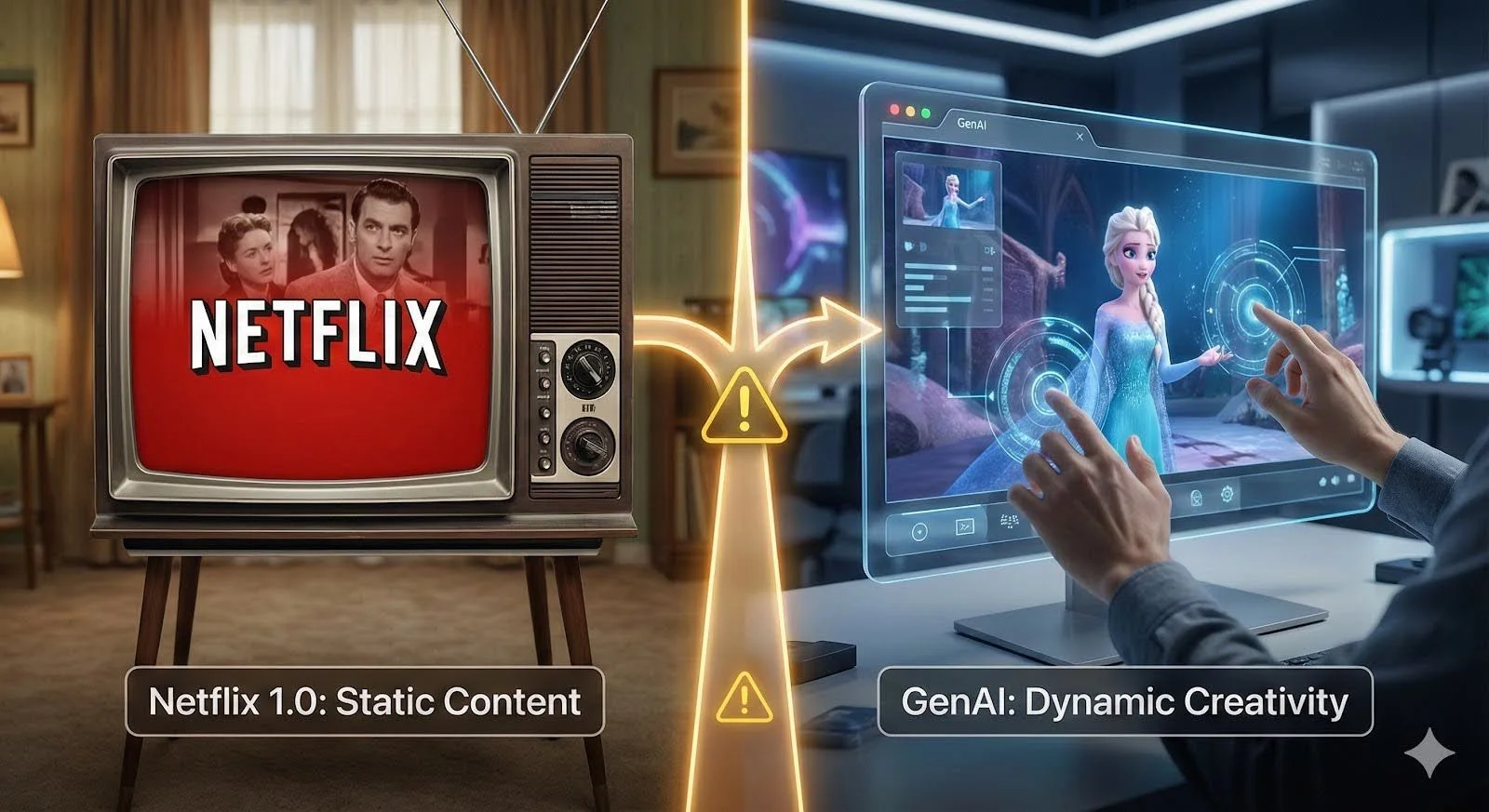
The saving grace? Disney’s savvy stipulation that curated fan creations will stream on Disney+. They are attempting to avoid the Netflix mistake by forcing the value loop back to their own ecosystem.
The New Water-Cooler Moments
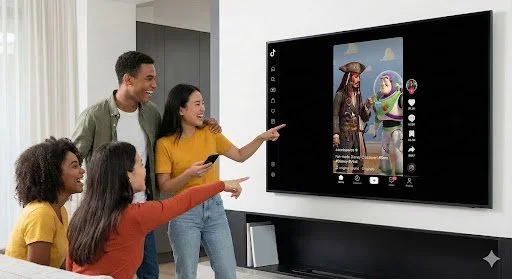
The definition of a "hit" is changing. The next Game of Thrones or Mandalorian buzz won't just come from a cliffhanger written by a showrunner. It will come from a fan in Ohio who uses Sora to create a mind-bending alternate ending or a crossover event that goes viral.
These fan-generated story worlds will become the new water-cooler moments. In this model, the fans become the vehicles of dynamic creativity. They provide the labor and the imagination, while the studio provides the governance and the assets.
The Asset Shift: From Static Content to Dynamic Data Models
Ultimately, this deal signifies a shift in what constitutes a media company's most valuable asset. It is no longer just the finished film on a reel. The value now lies in the IP and Brand Object data model—the digital DNA of the characters.
In a world where content is infinite and generated on the fly, the entity that owns the governance of that content—the ability to say "this is the real Iron Man"—wins. Disney is betting $1 billion that by controlling the data model, they can control the future of storytelling, even if they aren't the only ones telling the stories anymore.