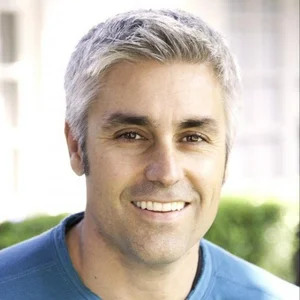
From ACR Pioneer to Agentic Ad Ops: Zeev Neumeier’s Next Act: Gray Swan
Before ACR became fundamental to modern TV measurement, it was widely considered impossible. Zeev Neumeier helped prove otherwise. As a co-founder of Cognitive, he built an automated content recognition system– ACR that —injecting real-time data into an industry that had long operated in the dark as to what ads or programs are actually on a screen at any given point in time.
After being acquired by VIZIO, rebranded Inscape and brought to market, that ACR solution is now the ultimate source of truth for TV and the backbone of big data the measurement industry relies on.
Now, he’s back with a new mission. As founder of Gray Swan, Neumeier is applying agentic AI to the chaos of CTV operations—helping publishers and ad tech companies make sense of sprawling datasets, surface meaningful signals and automate the kinds of decisions that used to take hours of dashboard-diving.
In the latest Revisionists podcast, Zeev sits down with TVREV Publisher Jason Damata to reflect on the risks of startup life, the evolution of streaming economics and why the real job of AI isn’t replacing humans—it’s removing the drudge work so they can finally focus on flying the plane.
Jason Damata, Publisher, TVREV: Zeev, I’ve known you for at least 10 years. Let’s start at the beginning. Who are you? Where do you come from?
Zeev Neumeier, Founder, Gray Swan: Hi, I’m Zeev. I’ve done a bunch of things in my life. Once upon a time, I was the CTO of a design agency. I built pretty websites back in the early days of the internet. I knew way too much about lipstick colors of the season. I went to Fashion Week. We launched fashion brands.
That was the late ‘90s—I was about 19 years old, living in New York, building websites in the heyday of the dot-com boom. I started out in banking and insurance, did some publishing work, then moved into agencies. Eventually, I became CTO of a design agency where we built design-centric web experiences for large brands.
In those early days, you could really wow people if you were creative and technically savvy—squeezing every last kilobyte out of the upload speeds we had. We built the web infrastructure behind major merchandising and marketing campaigns.
Then one day, I had an idea about how television needed better data. I built a demo on a whim—and that eventually became Inscape.
JD: Let’s slow down. How did you go from building websites to starting Inscape and getting into ACR? For those who don’t know, what is ACR, and how did you build it?
ZN: It was 2008. The world was crashing financially, and instead of worrying about that, I was worried about how television lacked data. I had worked with MTV and touched television earlier in my career. I knew the data was terrible.
Smart TVs were coming online, and without data, they didn’t make sense to me. Television was still a lean-back experience, but we wanted to make it active. So I built a demo around Automatic Content Recognition—ACR.
The idea was simple but considered crazy at the time: if the television doesn’t receive metadata about what it’s showing, then you create it yourself. You fingerprint the video on the TV, send that fingerprint to the cloud, match it against a massive lookup table, and determine exactly what’s on screen.
Now you know: this is a 30-second Ford commercial, and here’s the exact moment in the ad. That metadata can be stored—or sent back to the TV so it can do something, like prompt you to schedule a test drive.
There were two big technical challenges:
Generating fingerprints directly on the TV.
Handling millions of devices sending dozens of fingerprints per second to the cloud for continuous processing.
Today, that doesn’t sound crazy. In 2008, it absolutely did. People told us it was insanity.
JD: Did you know it was going to work?
ZN: Not a clue. To be a startup founder, you have to be delusional. Crazy isn’t enough—you have to believe you can crack something that makes no rational sense to crack.
We didn’t even fully understand why ACR would matter most. We thought it would transform linear measurement—and it did. But where it really flowered was in streaming. It became essential to making streaming inventory more valuable.
That required a confluence of things:
Cloud computing becoming viable at scale.
Streaming becoming mainstream.
Consumers adopting smart TVs.
We maybe predicted one and a half of those. The rest came together around us.
JD: You knew how hard the first startup was. Why start another? What problem were you trying to solve?
ZN: Coming out of Inscape, we had mountains of data. And I kept thinking: we’re barely scratching the surface of what we can do with it.
Two things changed:
The rise of AI made it possible to actually work with massive datasets.
Streaming became the main event, and companies were drowning in data.
I watched people walk into the office every morning, stare at dashboards, panic about something that “went bunk,” and spend hours chasing noise. Nine times out of ten, nothing was wrong. The one time something really was wrong, they missed it.
That’s the problem we’re solving.
We tell customers: you’re not in the media business—you’re in the airline business. You have perishable, lumpy supply (ad pods) and perishable, lumpy demand. Your job is to match them efficiently. If you’re asleep at the switch for an hour, that revenue is gone forever.
Gray Swan ingests your data, builds an AI context around your CTV business, understands what’s normal and what’s not, and tells you what matters.
JD: In a sentence or two, what is Gray Swan?
ZN: Gray Swan is an agentic AI platform that takes in your ad tech data, understands it in context, allows you to ask arbitrary business questions, and lets you task it to do things for your business.
It’s not just anomaly detection. It understands advertisers, campaigns, impressions, fill rates, CPMs—all of it. It knows what it doesn’t know, which is critical. If you don’t have certain data, it won’t hallucinate an answer.
JD: Who’s using this?
ZN: Two main groups:
1. Ad Ops / Yield Teams
They want to know: what broke? What changed? What should I worry about?
Instead of staring at dashboards, they task the AI to do it for them. It tells them when something matters.
2. Revenue & Sales Teams
They ask: how do I make more money?
For example: Which advertisers are buying programmatically that my sales team isn’t calling on? How do I improve fill rate on Channel X? When is political spend about to spike?
You task the machine with those jobs. It comes back with answers—and increasingly, actions.
What makes it agentic isn’t that it removes humans. It removes drudge work. It makes insights actionable.
JD: Does it send alerts?
ZN: Yes—daily digests are popular. But what I’m most excited about are taskable agents.
You can say:
“Watch political inventory and tell me when there’s a meaningful opportunity.”
You forget about it. Three weeks later, it pings you on Slack: “It’s happening.”
We also built a forecasting module. It can forecast combinations of dimensions—like projected political load tomorrow—so it can determine whether it’s a good time to sell.
JD: Everyone says they’re agentic. What makes this different?
ZN: Slapping a chatbot on top of a dashboard gives you a better search engine. That’s fine—but that’s not agentic.
Agentic means it behaves like a virtual coworker. You task it with something you’d normally give to a human. It does it well enough that you don’t feel the need to redo it yourself.
That requires deep contextual models of the CTV business—not just an LLM sitting on top of data.
JD: You just announced a partnership as well?
ZN: Yes—we announced a partnership with Operative. Some customers use our GUI, called Wingman. Others integrate our capabilities via APIs.
Everything we build is available as modular components. We like to think of ourselves as the Home Depot 📝 infrastructure layer of AI components for ad tech.
Not everyone needs to rebuild forecasting engines or advertiser classification models. They can plug ours into their systems.
JD: Anything else we didn’t cover?
ZN: This thing is a mile wide and a mile deep—but for an intro, that’s enough.
JD: Zeev Neumeier, always a pleasure.
ZN: Likewise.