What’s Wrong With Superhero Media?
When it comes to the once reliable superhero genre’s tumble from guaranteed hit to maddening uncertainty, the immortal words of Buffalo Springfield’s 1967 classic “For What It’s Worth” come to mind: “There’s something happening here./What it is ain’t exactly clear.”
Nine superhero movies and seven major superhero TV series have hit our screens since 2024 began. In the former camp, just two films are considered no-doubt-about-it hits (Deadpool & Wolverine, Superman), two performed okay but with worrying signs of fatigue (Venom: The Last Dance, Fantastic Four: First Steps) while the rest were flat out flops (Madame Web, Joker 2, Kraven: The Hunter, Captain America 4, Thunderbolts*).
On the small screen, we have enough data to know that six of the shows failed to drum up notable viewership (it’s still too early to know how the second season of Peacemaker will perform).
As Hollywood desperately grasps for stability, how can we explain the once dominant genre’s downturn? Examining pre-release tracking data from Greenlight Analytics for the films can help provide a trickle down effect for the shows and illuminate the rot within the genre at large.
What’s clear from the tracking data is that awareness is neither the problem nor the differentiator. Among the nine comic book movies, most clustered in the 60-75% awareness range by their release weeks. Even disappointments such as Brave New World and Thunderbolts boasted awareness levels comparable to Superman. That’s the power of the Marvel and DC brands. People will know about these titles.
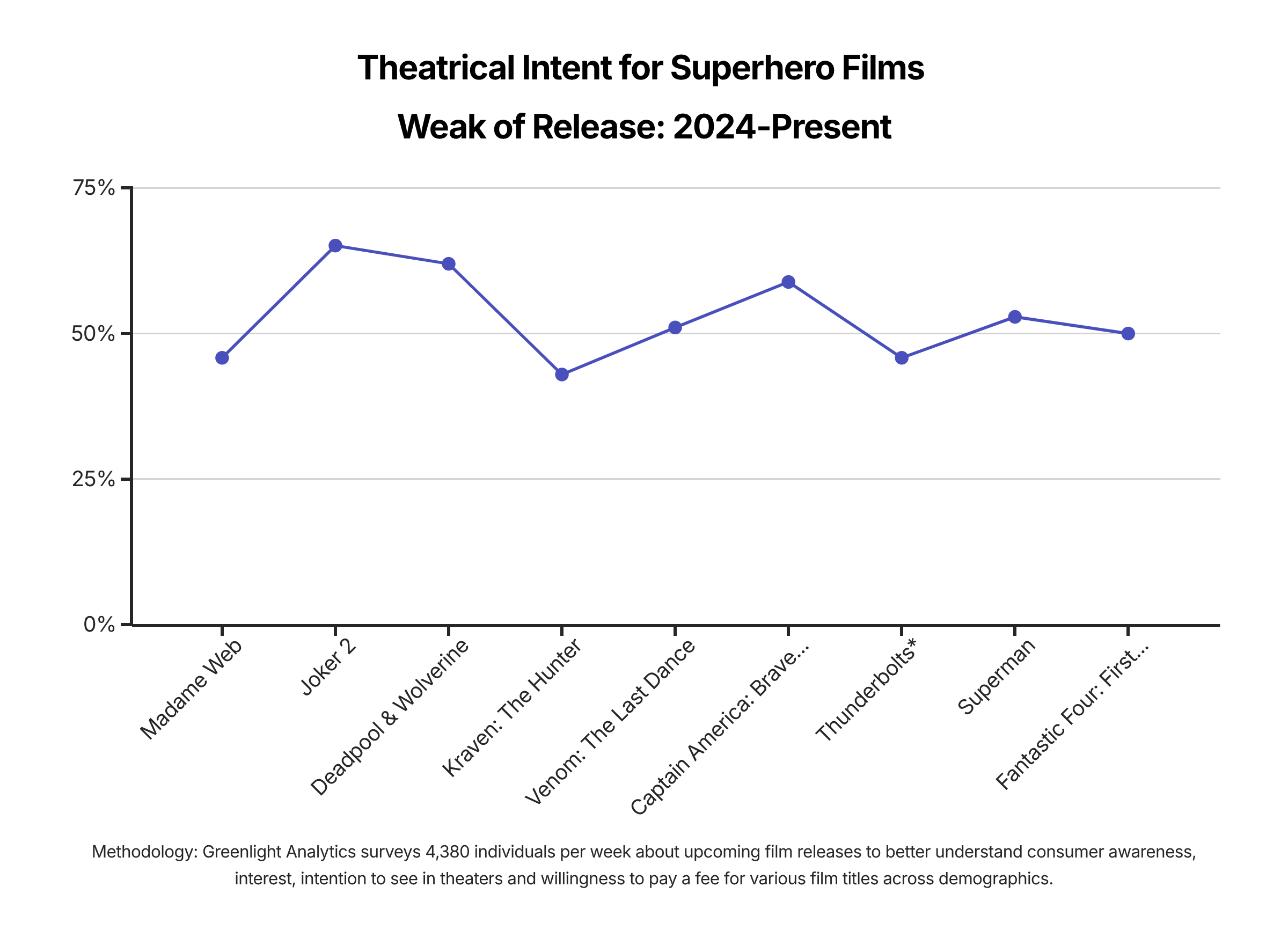
Theatrical intent—or those who say they will see a film in theaters—is the clearest separator. Hits such as Deadpool & Wolverine (62%) and Superman (59%) scored meaningfully higher here than the crop of flops (mid-40s to low-50s). Fantastic Four posted middling scores here (53%), which helps explain its solid opening but poor legs.
What’s particularly revealing is that those willing to pay a fee (either a theatrical ticket or a VOD transaction) over-indexed with male audiences but couldn’t overcome weak theatrical intent. Male audiences 35 and older consistently posted the highest fee scores across nearly all nine titles (often 65-70+%).
But unless that translated into broader theatrical intent, it didn’t result in box office success. At the same time, women under 35 were consistently under-engaged. Even with the two hits, this demo trailed others in interest and intent. This shows that Marvel and DC’s millennial and Gen Z female audience has become the most difficult to activate.
Theatrical intent is usually the key metric that most closely correlates with real world performance, though does not always produce a 1:1 result on its own (see: Brave New World, Joker 2). Hits required both male engagement and at least some balanced appeal across older demos (Superman, Deadpool).
Relying on just one specific audience subset (men only, or awareness without intent) was a recipe for disaster. Fantastic Four’s weak legs align with its middling theatrical intent and softer interest despite high awareness. It’s a clear example of curiosity without conviction. The same can be applied to the avalanche of small screen series too. The under 35 female gap is an industry-wide problem and represents the biggest obstacle for the genre moving forward.
It’s highly likely that 2026’s Spider-Man: Brand New Day and Avengers: Doomsday light up the box office. But December’s Wonder Man Disney+ series and next year’s Supergirl and Clayface movies represent crucial tests for not only the health of the superhero genre, but the studio’s ability to activate audiences beyond their core targets.