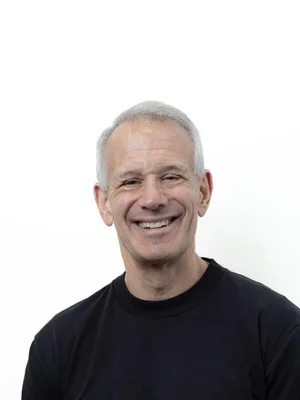
“At its most basic level, Ventura is software that lives on your TV—helping you launch apps, discover new ones, and find new things to watch,” said Matthew Henick, SVP at The Trade Desk. “But beyond that, it enables both product innovations for users and business model innovations for OEMs, retailers, publishers, and advertisers. So yes, it’s software, but it’s also a way to unlock value across the ecosystem.”
We sat down with Henick to get a better understanding of The Trade Desk’s Ventura TV operating system and what makes it tick.
ALAN WOLK (AW): Why is The Trade Desk getting into the OS business now? What’s the opportunity you see in CTV?
MATTHEW HENICK (MH): Since day one, our mission has been to help advertising clients compete in the marketplace of ideas. For us, that’s the premium open internet—the majority of content not controlled by the big tech walled gardens like Google and Facebook. That’s where most of humanity’s best art and culture lives: movies, TV, podcasts, music, sports, news.
We’ve been steering more and more marketing budget into CTV every year because that’s where consumers are. That gives us a vested interest in how the CTV ecosystem functions. We have skin in the game, and we want to make sure it’s fair, transparent, and working for advertisers, publishers, and ultimately viewers.
So Ventura is an extension of our mission: improving how money flows from advertisers through to publishers and OEMs in a way that benefits everyone.
AW: Let’s drill into OEMs and retailers. How can they benefit from Ventura?
MH: OEMs, operators, and retailers all share the same challenge: they’re putting hardware into living rooms and need to figure out how to make that sustainable.
For OEMs, the few dollars made selling a TV aren’t enough. For retailers, it’s the same, with thin margins on each set sold. Operators face the same problem with set-top boxes—they need recurring revenue but still have to choose what software runs on the hardware.
You can build that software yourself, but that means maintaining expensive technical, content, and ad sales teams.
Or you can hand it to Amazon, Google, or another big tech OS—but that means giving up customer relationships, billing, ad sales control, and even search and recommendations for the next seven years.
Ventura gives them a third way: the ability to keep ownership of the customer relationship, access their data, and avoid competing with the OS itself—all without the cost of building an in-house system.
AW: What’s been the biggest pushback you’ve faced so far?
MH: Trust. Every OEM, retailer, or publisher has been conditioned to mistrust their OS partner. Five years ago, those partners said they’d never launch a competing content service or manufacture TVs themselves—and now they have.
So when we come in and talk about Ventura, the natural reaction is: “What’s the catch?”
Our response is to be radically transparent. We explain why objectivity is central to our business. Every second of every day we evaluate 17 million ad opportunities on the internet for our clients. We only bid when we can do so with confidence. Ventura exists to make that supply chain cleaner and more transparent, which helps our clients—and in turn, it helps us.
That’s why we can look OEMs and publishers in the eye and say: we’re giving you back access to platform revenue you’ve traditionally lost. We win only when everyone wins together.
AW: You’ve talked about OEMs and retailers. Let’s drill into the benefits for publishers and advertisers.
MH: For publishers, Ventura means objectivity—they’re no longer competing with the OS itself—and a more transparent ad supply chain, which means more revenue and often a better ad experience for viewers.
For advertisers, it’s about efficiency. Today, when a Nike or P&G spends $1 in CTV, only about 40 cents reaches the publisher. The other 60 cents disappears into fees and intermediaries. Ventura reduces that leakage. Ads on Ventura should be more valuable because more of the spend gets to the publisher. That means better transparency, better measurement, and ultimately a better return for advertisers.
AW: And what about consumers? Is this something they’ll notice?
MH: We think so. Short term, people buy TVs on price, screen size, and resolution. The OS hasn’t been a selling point yet—and that’s as much an indictment of today’s OS options as anything else.
What consumers will notice is trust. Right now, when you turn on a TV, you’ve been trained not to trust the pixels on the screen—whether it’s a full-screen irrelevant takeover ad or a carousel filled with YouTube promotions.
With Ventura, the home screen reflects you. Your apps, in the order you want them. Recommendations based on what you want to watch, not what the OS owner wants you to watch. Search results that are actually relevant. Even how fast you get into playback will improve, because publishers trust us enough to open up API and catalog access that they wouldn’t with other OS providers.
So yes, consumers will feel the difference right away, even if it doesn’t yet drive the purchase decision.
AW: You’ve mentioned objectivity a lot. How do you define it, and how does it set Ventura apart?
MH: At The Trade Desk, we’ve always defined objectivity as putting our clients’ budgets in the best place for them, not for us. That’s why we’ve never owned ad inventory. We work directly with advertisers and publishers, and we only win when their businesses win.
For Ventura, that means we’ll never own a content service. We’ll never own a FAST channel. We’ll never steer a user toward one app over another for our own benefit. Our only incentive is to present the best option for the user.
That’s the foundation of objectivity—every decision about every pixel on the home screen is made in the user’s interest, not ours.
AW: Final question—what’s the one thing you wish people understood about Ventura?
MH: It comes down to owning your future.
Every partner is different. Some OEMs are global manufacturers, others are PE-owned brand licensors. Some retailers have their own in-house brands, others just sell third-party TVs. Operators, publishers, advertisers—all have different models.
Ventura is built so that, whatever your business looks like, you can own your customer relationship, control your data, and trust your operating system without spending hundreds of millions—or billions—building it yourself.
That’s the piece I always want to leave people with: Ventura is the best way to own your future.