The BBC, YouTube, And The Future Of Television
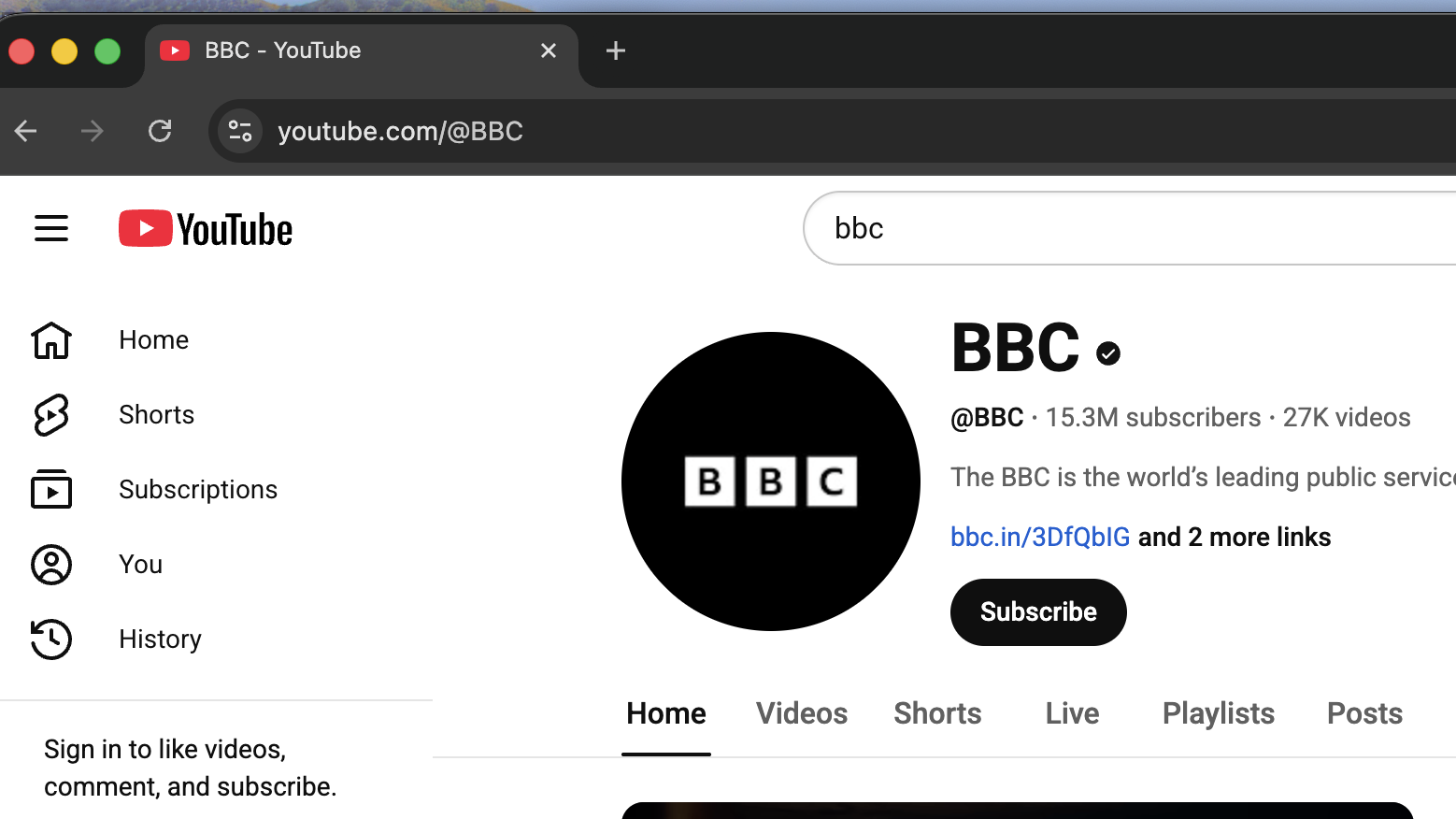
The BBC’s new content partnership with YouTube has reignited a familiar industry debate: Is YouTube television or not?
Alongside it comes a second, closely related question, whether a public service broadcaster, bound by Charter obligations and funded by the licence fee, should be producing original content for what many still frame as a competing platform.
Both questions are understandable. And both are increasingly misdirected.
They rest on an assumption that the BBC and YouTube sit in a zero-sum relationship: that value is either retained within owned environments or lost to external platforms; that producing content for YouTube necessarily weakens public service obligations; and that distribution and ownership remain tightly aligned. They also sideline the most important stakeholder in the system - the audience.
This partnership is not a platform land-grab, nor evidence of television “losing ground” to digital. It reflects a deeper shift in how television value is created and compounded over time, and a widening gap between how audiences now encounter TV and how the industry still interprets it.
What is ending is not television itself, but a media-planning-era view of TV: one rooted in demographics, containment, and control, rather than behaviour, habit, and demand formation. That older logic also treats IP primarily as an ad-delivery mechanism, valued for reach and impressions, rather than as an asset designed to accumulate relevance, loyalty, and cultural weight across surfaces and over time.
From an IP-led broadcasting perspective, the picture looks very different.
For broadcasters operating at scale, YouTube is not where value is lost. It is increasingly where audiences first encounter programmes, formats, and voices, often before making any conscious decision about where to watch more deeply. That early exposure shapes interest and expectation upstream of schedules and owned services. By the time viewers arrive on BBC iPlayer or Sounds, awareness and intent are already in place.
Seen this way, YouTube functions less as a rival destination and more as a distribution and discovery layer within the broader audience journey, very different from legacy pay-TV aggregators, but performing a structurally similar role within how audiences now move through content. Increasingly, it also operates as a live R&D environment. Formats, talent, tone, and storytelling can be tested, iterated, and refined in near real time, generating insight long before larger commissioning and investment decisions are made. That intelligence does not sit outside the system, nor does it dilute IP value. It feeds directly back into how IP is shaped, extended, and monetised across owned services and international markets.
Through this lens, the BBC–YouTube partnership looks deliberate rather than defensive.
The BBC is commissioning YouTube-first formats, investing in creator training and pipeline development, and using YouTube as a structured route into its owned services. In the UK, public service content remains ad-free. Internationally, monetisation sits outside the licence-fee framework, as it always has. Editorial control and IP ownership are retained throughout.
This is not a content dump, nor a shortcut around public service obligations. It is an acknowledgement that audience formation no longer begins inside owned platforms and that designing for audience flow has become as important as designing for schedules.
There is also a degree of historical amnesia in how this deal is being discussed. BBC content has long travelled beyond BBC-owned environments - through international syndication, home entertainment, global streaming platforms, and direct-to-consumer experiments such as the BBC Store. None of these collapsed the licence fee. None redefined the BBC as “not television”.
The issue has never been where BBC content appears. It has always been whether the strategy governing that distribution is intentional.
What has changed is not the principle, but the pace and visibility of audience formation. Audiences do not consume platforms, they consume formats, stories, creators, and moments. TVs are devices, not definitions. Measurement can tell us where viewing happens, but reach alone does not explain demand shaping, cultural relevance, or future IP value.
Seen in this context, the significance of the partnership extends beyond distribution and into how television leadership is now exercised.
The more revealing question is not whether audiences think YouTube is TV. It is whether the industry still understands what television is for.
This is where the BBC’s move begins to look quietly confident. YouTube builds a habit. Habit builds familiarity. Familiarity builds demand. That demand does not weaken owned environments, it increases their value. The logic here is continuity rather than campaign. Television once owned both. Today, they are split, and the BBC is designing for that reality rather than resisting it.
Some criticism of the partnership is driven by optics rather than strategy. But leadership in television today is not about defending definitions or preserving familiar boundaries. It is about building systems that reflect how audiences actually behave before planners, pundits, or policymakers catch up.
The implications extend well beyond the BBC. Public broadcasters must separate cultural mission from distribution orthodoxy. Youth reach is not a marketing KPI, it is an existential one. Platform partnerships do not dilute public value. Ignoring them does.
The real risk here is not YouTube. It is strategic paralysis. clinging to planning models built for a closed, linear world while audiences move on.
In that sense, the BBC–YouTube partnership is not a referendum on platforms. It is a stress test of how well the television industry understands its own future. It does not ask whether YouTube is TV. It asks whether television is ready to evolve and whether the industry is willing to follow audiences rather than definitions.