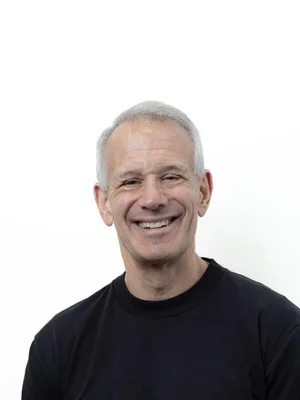
Matthew Henick On Why OEMs Need Better Ad Infrastructure, Not More Middlemen
“The ad supply chain in CTV has too many layers between the advertiser and the screen. That means OEMs and publishers are leaving real revenue on the table, and advertisers aren’t getting the transparency they need to spend confidently.”
We sat down with Matthew Henick, SVP, Consumer Products at The Trade Desk, to talk about the Ventura Ecosystem, why the company believes shared ad infrastructure can help OEMs increase revenue without giving up control, and what the Nexxen deal is meant to prove out.
ALAN WOLK (AW): What you’re really announcing here is an ad infrastructure layer for OEMs. What market need are you looking to fill here and why is The Trade Desk uniquely positioned to fill it?
MATTHEW HENICK (MH): The ad supply chain in CTV has too many layers between the advertiser and the screen. That means OEMs and publishers are leaving real revenue on the table, and advertisers aren’t getting the transparency they need to spend confidently. The longer that persists, the harder it gets to fix because the system calcifies around whoever controls the pipes today.
We built Ventura to fix this at the OS level. The Ecosystem extends that to the broader industry. Partners get access to our ad tools like OpenPath, UID2/EUID, OpenPass, and soon OpenAds, and can be up and running in weeks. Not a roadmap. Working tools that drive results immediately.
AW: What are you hoping the Nexxen deal allows you to prove out in terms of Ventura’s ultimate value to the industry?
MH: That the biggest problems in CTV advertising are fragmented identity, opaque measurement and inefficient auctions. They are solvable when companies stop trying to solve them alone. V [FKA Vidaa] brings over 50 million connected devices. Nexxen brings deep supply chain expertise. If we can show that working together on shared infrastructure delivers measurably better results for advertisers and publishers, then we’ve proven the entire Ecosystem thesis.
AW: Nexxen is the launch partner here, and their biggest OEM relationship is with V/Hisense. What does that footprint actually look like in terms of addressable inventory, and how do you define success at this stage?
MH: V powers more than 50 million connected devices worldwide, including Hisense and Toshiba televisions. Integrations are being implemented now and we expect inventory to be available early in Q2.
Success at this stage is simple: does better infrastructure produce better revenue? We believe it will, and we’ll have the data to show it.
AW: The tools bundled into the Ventura Ecosystem—OpenPath, UID 2.0, OpenAds, OpenPass—are all existing TTD infrastructure. Talk me through how buyers should differentiate between Ventura and The Trade Desk.
MH: The Ventura Ecosystem is focused on CTV specifically, and it goes deeper than technology. Yes, partners get access to tools like OpenPath, UID2, OpenAds and OpenPass to simplify the supply chain. But the Ecosystem is also about agreeing on standards on what ad formats respect audiences, how identity should work across platforms and how measurement should be consistent. That kind of collaboration doesn’t happen through a DSP. It happens when OS-level players sit at the same table.
Ventura’s streaming OS remains our core product. Additional elements of the OS will be brought into the Ecosystem over time.
AW: You’re promising OEMs better CPMs and fill rates. What’s the mechanism—is it purely demand aggregation, or is there something in the stack that can improve yield beyond just connecting more buyers?
MH: It’s not just about connecting more buyers. Think of it as removing friction at every step of the transaction. OpenPath cuts out unnecessary middlemen between the buyer and the screen—fewer hops, more money reaches the publisher. UID2 gives advertisers consistent identity across platforms, so they can target and measure with confidence. And confidence is what drives them to pay more. OpenAds makes the auction itself more competitive and fair. Stack those together at the OS level and each ad slot becomes more valuable, not because there are more bidders, but because the system works better for the bidders who are already there.
AW: You’ve emphasized that deals like this allow OEMs to maintain “control of their brand, system and user experience.” Why is that important to OEMs and what are they actually gaining here?
MH: The partners joining the Ecosystem have built their brands, their user experience and their product over years. They don’t want to hand that to someone else. What they want is a way to make more money from their ad inventory without giving up ownership of the experience. That’s exactly what the Ecosystem offers: better ad infrastructure underneath, full control of everything the user sees on top.
AW: What’s your timeframe for Ventura bringing in other partners so that you reach the kind of scale where you can meaningfully change how agencies plan and buy CTV?
MH: We expect more partners to join as early as Q2 2026.