I am a rabid fan of author George R.R. Martin’s A Song of Ice and Fire, the sprawling fantasy-realism world that has birthed Game of Thrones, House of the Dragon, and A Knight of the Seven Kingdoms. One small but crucial story element I love is the dice roll of destiny that often manifests in subtle but meaningful ways. In this fictional world, most knights outside of the upper echelon boast comparable skills and abilities. Yet despite that even footing, some emerge victorious in battle while others fall well short of ever reaching old age.
The battle for box office dollars is no different. Many films possess most of the same basic ingredients for success. High Interest Among Aware audiences, meaning those who know about an upcoming title and express interest in it, is common among top theatrical releases. But box office outcomes can still diverge anyway.
So where does that separation actually happen? And what does it mean for a film’s prospects in the never-ending battle for prominence?
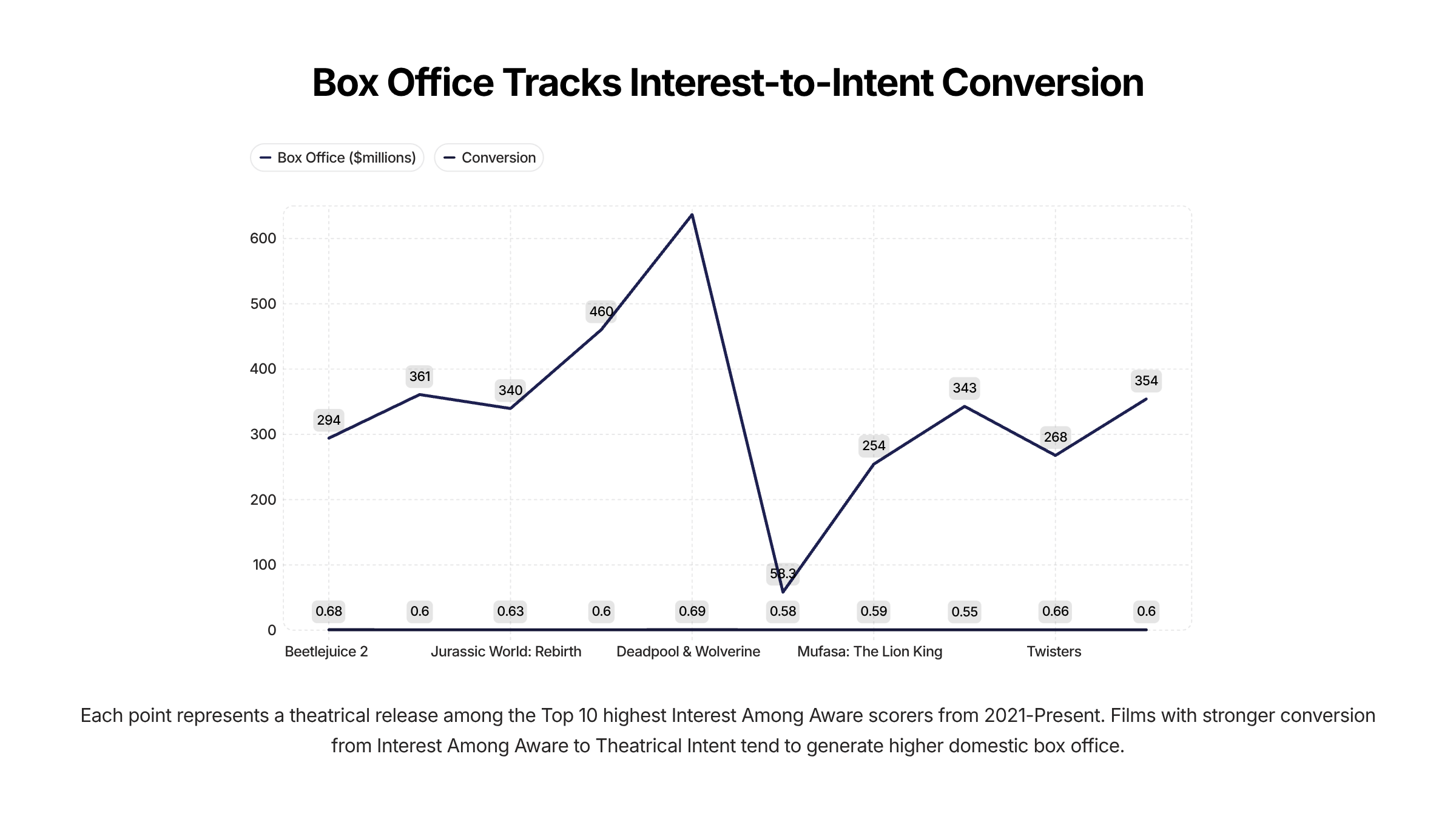
To explore this, I looked at the top 10 theatrical films in Interest Among Aware from 2021 to the present, according to Greenlight Analytics, and compared those scores with their Theatrical Intent (those planning to see a movie in theaters) and final domestic box office revenue. The goal was simple: understand whether conversion is a more meaningful driver of success than raw interest alone.
The Interest Among Aware to Theatrical Intent conversion ratio is particularly illuminating. By dividing the latter by the former, a higher ratio implies greater urgency per unit of interest, while a lower ratio suggests weaker follow-through. This top 10 data set ranges from Superman (83%) to Beetlejuice, Beetlejuice (93%), elite scores across the board. Yet domestic ticket sales begin to splinter meaningfully at the Theatrical Intent level.
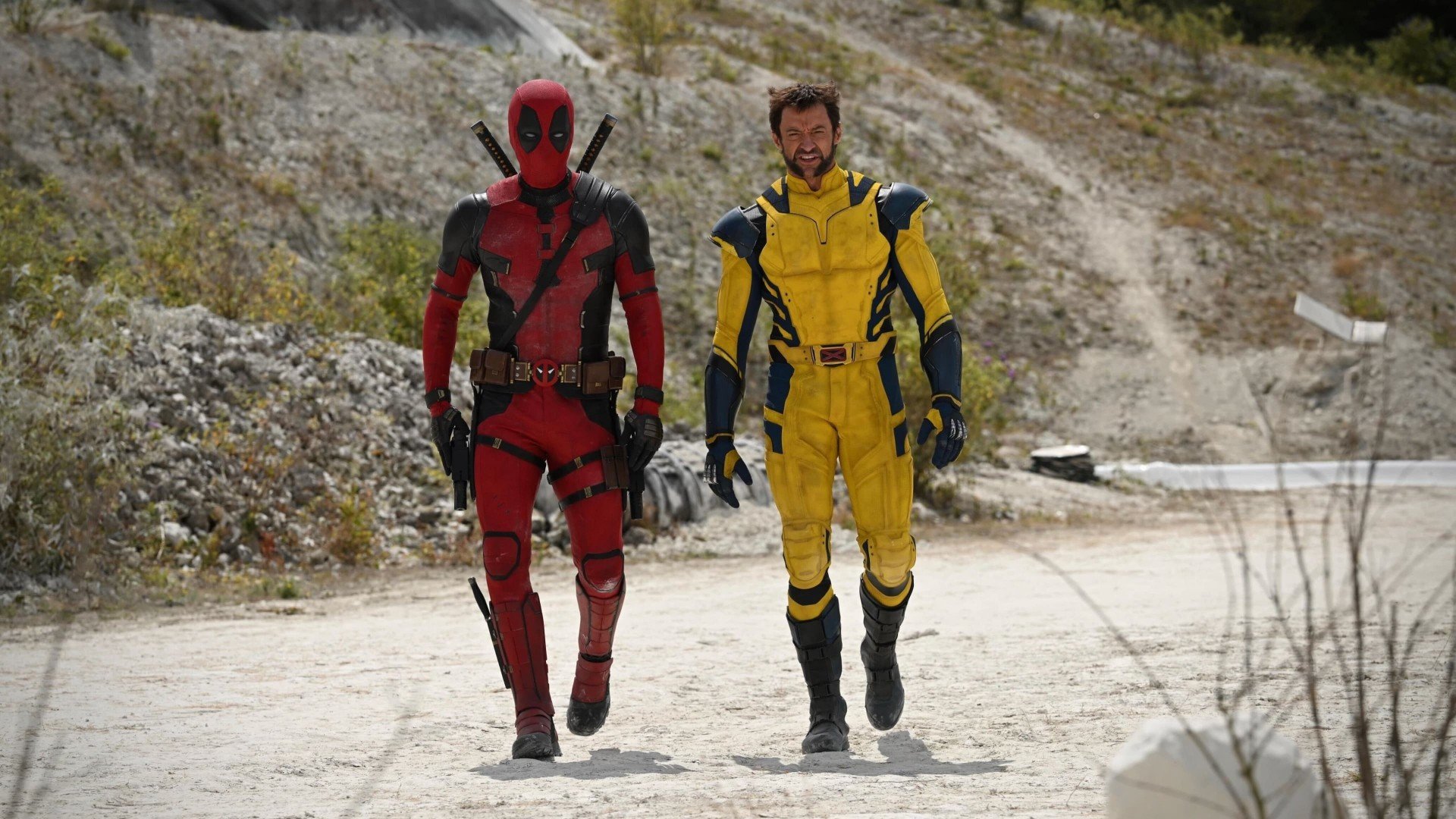
Massive blockbuster successes such as Despicable Me 4 ($361 million), Moana 2 ($460.4 million), and Deadpool & Wolverine ($636.7 million) convert aware interest at a much higher rate. Wicked: For Good ($342.9 million) and Mufasa: The Lion King ($254.4 million) are still hits, but they convert interest less efficiently. Then there’s Joker: Folie à Deux, which posted high Interest Among Aware (86%) alongside comparatively soft Theatrical Intent (50%). The result was one of the biggest box office bombs of the post-pandemic era, an outlier that ultimately proves the rule.
These learnings extend beyond the big screen to the small. Low theatrical conversion does not automatically equate to low demand. High interest and strong awareness paired with softer Theatrical Intent can signal a preference for at-home viewing rather than outright rejection.
Take Nobody 2 as an example. The film was released with relatively soft Theatrical Intent (39%) but a respectable 58% Interest Among Aware. It went on to draw 555,000 U.S. premium video-on-demand views in its first 12 days of availability, per Samba TV. Since PVOD rentals typically cost around $20 and full purchases closer to $30, that translates to roughly $13 million in incremental revenue. Conversion efficiency does not just reveal whether demand exists, but where it is most likely to materialize across the monetization life cycle.
So, class, what have we learned? Major box office victors are exceptionally good at converting interest into urgency through ticket sales. Films that do not convert as efficiently are not necessarily dead on arrival, but outcomes depend on the strength of early demand. Either way, smarter prescriptions across windows start with paying attention to the right metrics. That is what makes the difference between winning the tourney and dazedly looking up from the flat of your back.