In Praise Of Local Public Access TV
For decades, local broadcasters regarded public-access television with a kind of bemused condescension. It was cable’s civic obligation — the ramshackle corner of the media ecosystem reserved for awkward call-in programs, amateur hosts, low-budget ethnic programming, municipal hearings, church broadcasts, and eccentric local personalities speaking passionately to audiences that often barely existed. Public access was chaotic, technically uneven, aesthetically crude, and culturally unserious. Real television, broadcasters believed, happened elsewhere.
And yet, in 2026, public access suddenly feels strangely ahead of its time.
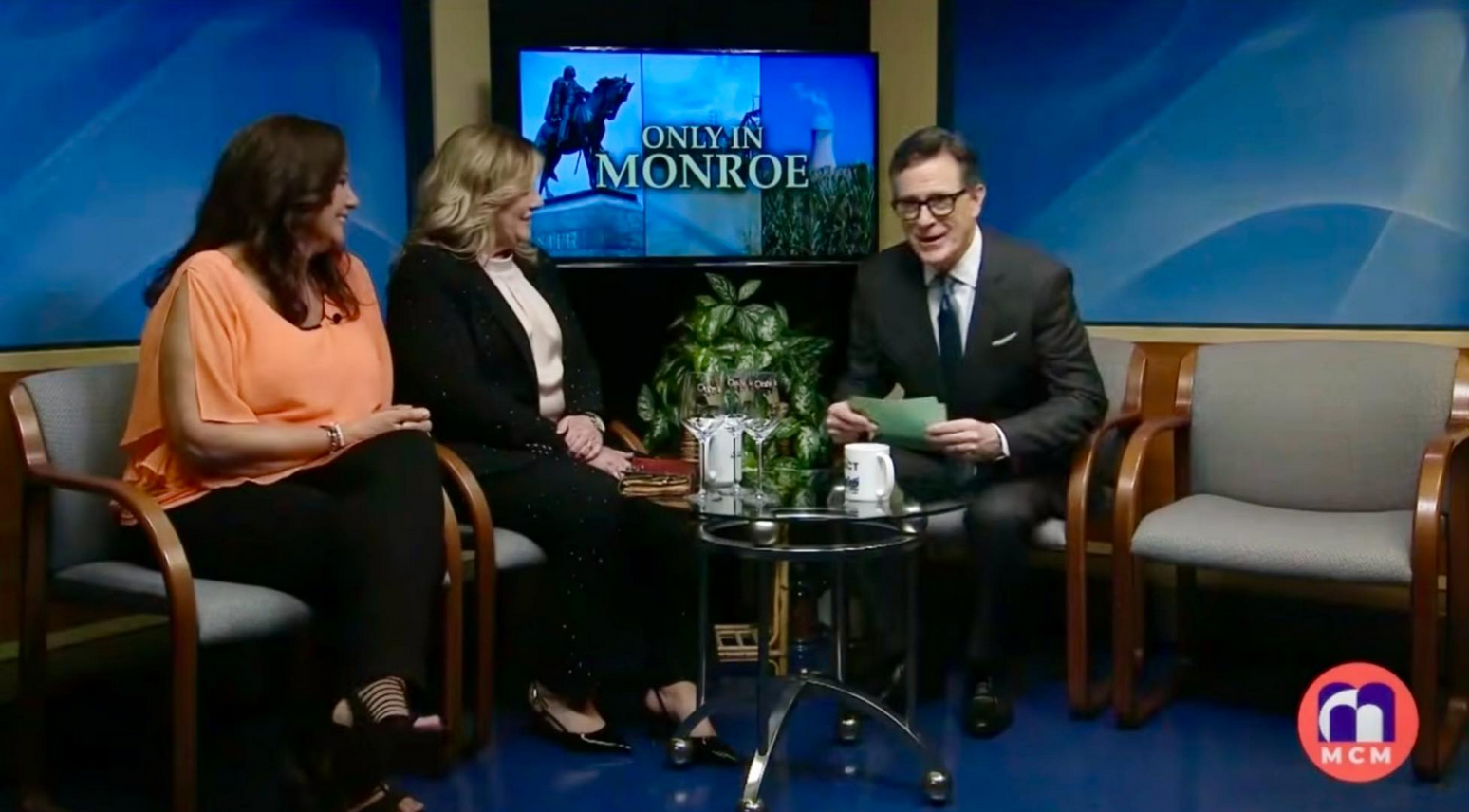
The recent spectacle of Stephen Colbert’s return appearance on a tiny Michigan public-access program resonated for reasons that extended well beyond novelty. What audiences seemed to respond to was not merely the humor of watching a national television personality descend into hyperlocal obscurity. It was the startling sense of authenticity that accompanied it. The program felt human, unpolished, deeply local, and refreshingly disconnected from the homogenized rhythms that increasingly define modern television.
That reaction should unsettle the broadcast television industry more than it probably does.
The Localism Broadcasters Left Behind
For years, local broadcasters have wrapped themselves in the language of “localism,” invoking civic responsibility as both regulatory shield and public justification for the extraordinary privileges attached to free over-the-air spectrum licenses. But much of local television today feels curiously detached from the communities it claims to serve. The industry still produces vital journalism and remains indispensable during breaking-news events, severe weather, and emergencies. Yet culturally, many stations have evolved into highly optimized retransmission-and-political-advertising businesses whose programming structures feel increasingly standardized, transactional, and disconnected from the texture of everyday local life.
The irony is difficult to ignore: at precisely the moment broadcasters began trying hardest to resemble cable networks and digital media companies, audiences started gravitating toward media experiences that felt smaller, stranger, more participatory, and more authentic.
Public-access television, for all its flaws, understood something fundamental that commercial broadcasters gradually abandoned. It allowed communities not simply to consume media, but to inhabit it. Public-access channels reflected the actual eccentricities of local culture — immigrant communities producing programming in their native languages, neighborhood activists debating intensely parochial issues, amateur musicians, obscure sports, local political obsessives, church leaders, hobbyists, eccentrics, and aspiring creators experimenting in public. Much of it was undeniably bad television by conventional professional standards. But it was unmistakably alive.
Public Access Before The Internet
In retrospect, public access looks less like a relic than a primitive precursor to the modern creator economy. Silicon Valley built trillion-dollar platforms around principles broadcasters once dismissed as amateurish: participation, low barriers to entry, niche audiences, local identity, and personality-driven media. YouTube is, in many respects, simply globalized public access with algorithms. TikTok is public access accelerated by machine learning. Podcasts are public-access radio with better microphones and monetization infrastructure.
Meanwhile, many local broadcasters continue operating with a one-to-many programming philosophy that feels increasingly inherited from another era altogether.
This matters because the greatest threat facing local television may not ultimately be Netflix, YouTube, or even cord-cutting itself. The deeper danger is local irrelevance.
Broadcasters still possess extraordinary structural advantages. They maintain recognizable brands, physical infrastructure, newsroom operations, trusted meteorologists, long-standing advertiser relationships, and universal free-to-air distribution. But those advantages become less meaningful if younger audiences no longer perceive local television as culturally connected to their communities. Increasingly, local identity and civic conversation are migrating elsewhere — into neighborhood Facebook groups, Discord servers, local podcasts, YouTube creators, newsletters, Reddit communities, and social feeds that often feel more immediate and participatory than the carefully managed environment of local television news.
Broadcasting’s Last Differentiated Asset
At the same time, the industry is asking policymakers and regulators for extraordinary flexibility. Broadcasters seek ownership deregulation, expanded consolidation opportunities, retransmission leverage, and regulatory accommodation for the transition toward ATSC 3.0 and “NextGen TV.” Yet beneath all those policy debates sits a more uncomfortable question that the industry has not answered particularly well: what unique public value are broadcasters providing in exchange for privileged access to valuable public spectrum?
For generations, the answer was self-evident. Broadcasters were among the few institutions capable of delivering local news, emergency information, sports, weather, and shared civic experiences at scale. But scarcity no longer protects the business. In a world saturated with digital alternatives, broadcasters cannot simply assert civic importance; they increasingly must demonstrate it.
That is why the industry may need to rediscover the strategic value of something resembling modernized public access.
Not as nostalgia. Not as kitsch. And not as some performative exercise in civic branding. Rather, as a recognition that local participation itself may represent broadcasting’s last truly differentiated asset in an otherwise fragmented media environment. The future value of ATSC 3.0, for example, may depend less on 4K picture quality or interactive advertising than on whether broadcasters can use their spectrum and platforms to rebuild meaningful civic connection inside local markets.
Local Authenticity = The Ultimate Differentiator
Because broadcasters cannot out-scale Silicon Valley, out-engineer streaming platforms, or out-target digital advertising giants. But they can still offer something the largest technology companies often struggle to manufacture authentically: a sense of place.
For too long, local television has attempted to modernize by moving culturally farther away from the communities that once made it indispensable. Public-access television, however imperfectly, understood that local media derives its value not from polish alone, but from proximity, participation, and civic texture.
Cable operators once maintained public-access channels because regulators required them to. Local broadcasters may soon discover they need a modernized version of that same philosophy simply to remain culturally and politically relevant at all.
Episode 10 of “In the Vicinity”
Local News To Peruse
Local TV Faces Financial Pinch As Political Ad Spending Increasingly Moves Online - Lukas Alpert [MarketWatch]
FCC Should Modernize Communications Policy For Converged Markets - Jeffrey Westling [International Center For Law & Economics]
CBS News Radio Ends With An Edward R. Murrow Sign Off: “Good Night, And Good Luck” - Ted Johnson [Deadline]
Listen Up America, The World Is Changing - Frank "SuperFrank" Copsidas [LPTV Broadcasters Association]
Once Sprinting, Broadcast M&A Winds Down To Amble Amid Nexstar-Tegna Court Challenges - Janet Stilson [TVNewsCheck]