Viewers Crave More Authentic Stories About Work, Family and Caregiving
In a media landscape often dominated by spectacle and escapism, new research shows that audiences want something different: stories that reflect the realities of everyday life.
A study by MarketCast, commissioned by New America, finds that Americans overwhelmingly value authentic portrayals of work, family and caregiving in entertainment. At a time of cultural division, these shared experiences are resonating across demographics and pointing to an opportunity for content producers and streaming platforms.
The survey of more than 1,300 streaming viewers revealed that a staggering 92% said they value realistic portrayals of work, family and caregiving in TV and film. Half of respondents are interested in seeing more of this kind of content, while only 4% want to see less. Groups placing the highest value on these themes include adults ages 25 to 39, Black and Latine audiences, parents and households earning more than $100,000. Viewers also say they connect more deeply with characters who grapple with struggles similar to their own, underscoring the power of relatable storytelling.
“This research underscores the power of entertainment to help people see themselves and each other,” said Vicki Shabo, founder and director of New America’s entertainment initiative. “Viewers are eager to see the things that bring us together and make us human — the relatable, common challenges millions of us share.”
The findings also highlight a significant business opportunity for streamers. Sixty-five percent of respondents said they are “likely” or “very likely” to subscribe (or keep subscribing) to a service that carries authentic portrayals of work and family life. The numbers are even higher among parents and men under 35. Nearly nine in ten viewers said that shows with relatable themes inspired them to recommend content to others, helped them feel seen or gave them a better understanding of others’ experiences. These patterns suggest that such storylines can drive both loyalty and organic word-of-mouth growth.
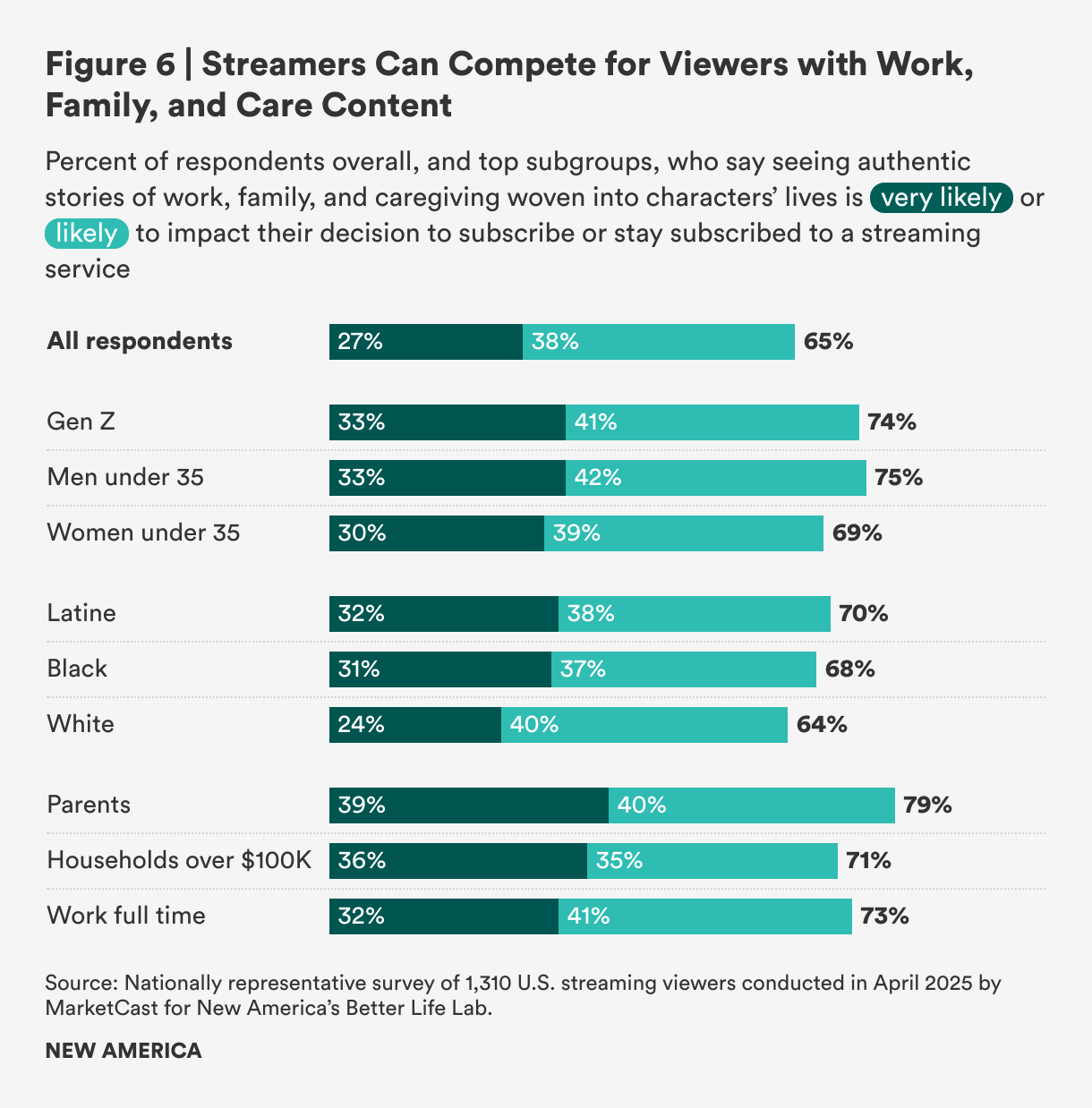
“Work, family and caregiving are meaningful, universal themes that shape how people connect, consume and understand the world,” said Ben Carlson, EVP at MarketCast. “That’s a powerful signal for studios and streamers looking to drive deeper engagement, grow audiences and build lasting cultural relevance.”
The study points to popular titles like Abbott Elementary, The Last of Us and Severance that demonstrate that shows incorporating these themes can achieve both critical acclaim and commercial success.
There’s also a strong appetite for representation. Eighty-seven percent of viewers said they want to see more inclusive portrayals of race, ethnicity, income and family structure. Six in ten expressed interest in stories about immigrant or mixed-status families, with even higher interest among Latine and non-white viewers. More than half said caregiving and workplace leave are underrepresented in current content, and 48% want to see storylines about leaving a job entirely to provide care. More than 80% expressed interest in depictions of how work and family stress affect mental health, how men and women balance caregiving responsibilities and how communities, workplaces and policies can provide support.
Perhaps most telling, the stories viewers most want to see are also those they expect to encounter in their own lives in the next five years. That demand for relevance makes clear that audiences are not only seeking visibility but also emotional truth and social resonance. For an industry searching for both cultural impact and subscriber growth, the path forward may lie in embracing the complex realities of work, family and caregiving.