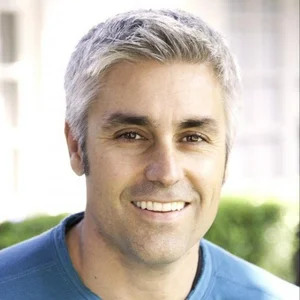
The Revisionists: Inside OpenAP With Brittany Slattery
In this episode of The Revisionists, TVREV Publisher Jason Damata sits down with Brittany Slattery, CMO of OpenAP, to unpack how the industry’s largest competitors have learned to collaborate, why fixing “the pipes” is essential to performance and outcomes, and what it really takes to build trust in an era of fractured audiences and shifting currencies.
From OpenAP’s origins as a linear TV consortium to its expanding role in streaming identity and the Joint Industry Committee, Slattery offers a candid look at the hard, human work behind scalable advertising—and the values that guide her leadership both inside and outside the industry.
Jason Damata: Tell us a little about OpenAP and your role there. What does the company do?
Brittany Slattery: OpenAP was founded in 2017 as a consortium created by the television networks. At the time, our mission was to standardize advanced audience buying on linear TV. Data-driven linear was still very nascent, and we helped create simplicity and scale across the buying workflow so advertisers could reach more targeted audiences.
In simple terms, if I’m a diaper company, I may want to reach moms with kids under three rather than everyone watching TV. OpenAP helps marketers reach the right audience at the right time in ways that drive meaningful outcomes for their brands and businesses.
Jason Damata: Who are OpenAP’s members today, and how does the model actually work?
Brittany Slattery: Today, OpenAP is owned by Paramount, NBCUniversal, Warner Bros. Discovery, and Fox, with Snowflake as a strategic investor.
Early on, the challenge was that every network defined audiences differently. That made buying and measurement incredibly difficult to scale. We created a standardized way to define audiences, activate them, and distribute them across publishers—so campaigns could be measured on an apples-to-apples basis.
Since then, we’ve evolved with the market. We started in data-driven linear, but today we’re focused on helping standardize identity for streaming. If identity was hard in linear, it’s even harder in streaming, given the fragmentation of platforms, data sources, and currencies.
At our core, OpenAP creates a shared foundation that makes a scalable, effective future for video advertising possible—one that is open, interoperable, and connected, while ensuring consumers see advertising that’s relevant to who they are.
Jason Damata: When people hear “common identity,” they often imagine a single ID across all networks. Is that realistic?
Brittany Slattery: A few years ago, there was a debate about whether there would be one identity spine to rule them all. We don’t believe that’s realistic.
Agencies have invested heavily in proprietary data stacks. Publishers have invested in first-party data from logged-in streaming consumers. The future is one with multiple identity sources brought together in a privacy-safe way.
Multi-source identity is just one step. You also need business rules and logic to resolve and match identity inputs, and ultimately a single source of truth for the audience so that when it’s distributed across publishers and endpoints, it stays consistent throughout the campaign lifecycle.
Jason Damata: Why is that consistency so important right now?
Brittany Slattery: Marketers today are under enormous pressure to prove performance, outcomes, and accountability. To do that, you have to fix the pipes.
It’s not glamorous work—I joke that it’s plumbing—but that shared foundation enables real performance measurement, better creative opportunities, and sustained reach at the moments that matter most to consumers.
Finding the right viewer is only half the battle. You also have to reach them consistently in meaningful moments.
Jason Damata: That leads nicely into the Joint Industry Committee. Why did OpenAP get involved with the JIC?
Brittany Slattery: In 2023, there was a real need to create more competition and choice around currencies, along with shared standards that buyers and sellers could agree on for transactability.
At the time, no single organization was focused on transactability itself. OpenAP had experience bringing competitors together, helping them compromise, and establishing shared frameworks—so we were asked to help shepherd that effort.
Today, as we look toward 2026, the emphasis is on currency stability, standardized measurement, and confidence in outcomes across a converged ecosystem. Linear isn’t going away—sports and live events remain culture-defining—but measurement needs to evolve with how content is consumed.
Jason Damata: OpenAP has succeeded where many councils fail. How did you get competitors to collaborate in a meaningful way?
Brittany Slattery: A lot of credit goes to the founding members, who recognized that as walled gardens grew more dominant, premium video needed to be easier to buy across platforms.
The goal was to make buying premium video as easy as buying Facebook or Google—through a centralized workflow with consistent measurement. Networks should compete on content, storytelling, and experiences. Our role is to create the shared infrastructure beneath that competition.
At the end of the day, this is a people business. Trust, relationships, collaboration—that’s what drives real transformation. Sometimes that means closed-door workshops, sometimes it’s long dinners, and sometimes it feels like corporate therapy. But that environment is what allows innovation to actually happen.
Jason Damata: Let’s close with you personally. Outside of OpenAP, who is Brittany Slattery?
Brittany Slattery: My favorite role is being a mom. I have two kids—a four-and-a-half-year-old and a 20-month-old—and I live in Brooklyn. I’m originally from Ohio, from an immigrant family. My grandmother came to the U.S. from Yugoslavia on the Queen Mary, and I’m the first in my family to earn a four-year college degree and the first woman to hold a senior leadership role.
I’ve spent a lot of time thinking about impact. I may not be changing the world with a capital “W,” but I focus on changing my world—the people around me—through empathy and human connection.
I love travel and experiences, and I often bring my kids with me, even to places like Cannes, to broaden their perspectives. At OpenAP, when the work feels hard, we remind ourselves that we’re helping sustain long-form storytelling in an increasingly short-form, AI-driven world. That North Star makes the hard work worth it.