Political Advertising To The Rescue — But for How Long?
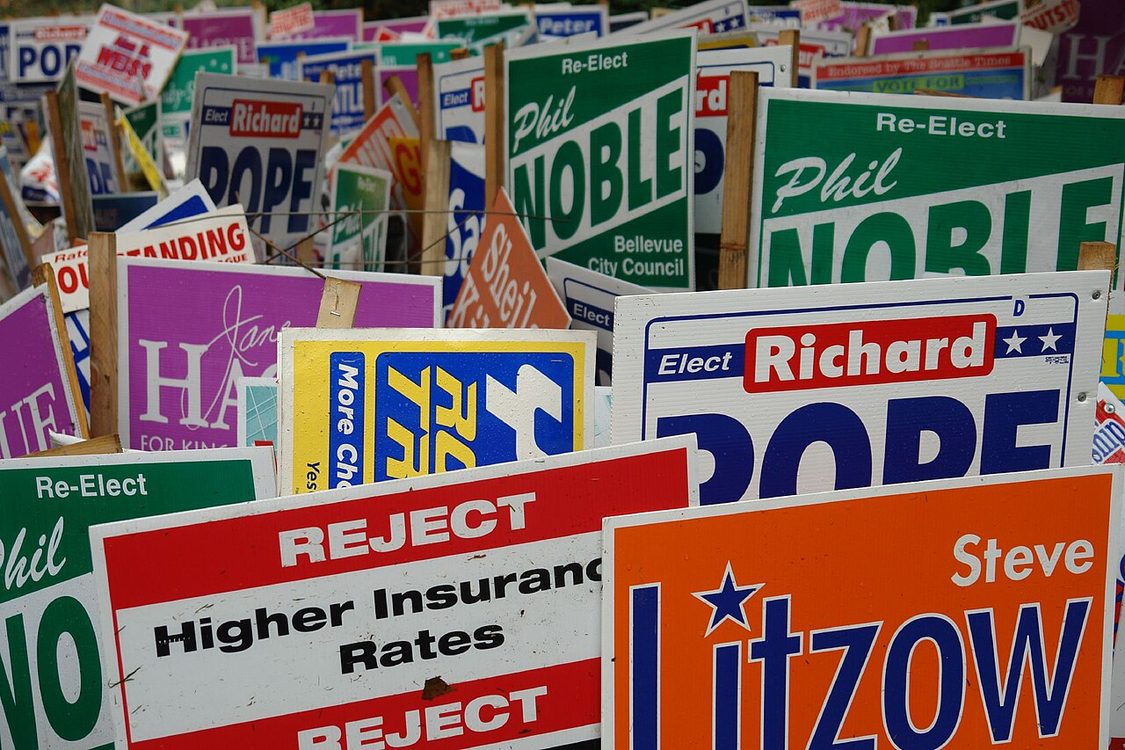
For local television, political advertising has become the most dependable contradiction in the business.
The long-term outlook for broadcast remains uneasy. Audiences keep fragmenting. Core commercial categories remain under pressure. Streaming keeps pulling attention, and Wall Street’s tolerance for cyclical revenue models seems to thin with every earnings call.
And yet, every election cycle, political advertising rolls in like a financial shock absorber, temporarily reminding everyone that local TV still matters.
This year, that reminder may be louder than ever. In an updated forecast released last week, AdImpact raised its months-ago projection for the 2025-26 election cycle to $11.6 billion, up from $10.8 billion. Even more striking, the political ad intelligence firm now expects the 2026 midterm cycle to surpass the 2024 presidential cycle in total political spending — a projection that would have seemed highly unlikely even a few cycles ago.
For local broadcasters, one number may matter most: the projected $5.6 billion that AdImpact says will flow to broadcast television, or nearly half of all political ad spending.
That would seem to settle the debate. Local television still commands a central role in political campaigns. But the more useful conclusion is more complicated: political advertising is not just propping up local TV’s economics in the short term. It is also masking some of the industry’s longer-term strategic problems.
Political money is not solving those problems — it is merely postponing them.
Why Broadcast Still Matters
Political advertising has always behaved differently from nearly every other category of spending.
In this week’s episode of the TVREV podcast In The Vicinity, AdImpact founder and CEO Kyle Roberts offered a simple explanation for why broadcast television continues to capture such a large share of campaign dollars even as digital targeting and connected TV become more sophisticated —campaigns still do not know with certainty who will vote.
That uncertainty changes everything. The logic of digital advertising depends on precision: find the right person, avoid the wrong one and spend efficiently. Political advertising, by contrast, operates in a world where the most important variable is often unknowable until Election Day itself. Voter turnout models are imperfect. Persuadable voters are hard to isolate. Low-propensity voters can suddenly become decisive. And the behavior of the electorate often resists the neat assumptions of historical data.
That is why “mass-reach” media still has value.
Broadcast television may not be the most efficient vehicle campaigns can buy. But it remains one of the most effective ways to reach a broad audience across an entire market, especially in statewide races where campaigns cannot risk missing pockets of potential support.
In that sense, local TV’s role in politics is not an accident. It is a function of the medium’s enduring strength: the ability to deliver scale.
The Inefficiency That Politics Tolerates
What makes political advertising so striking is not just that broadcast remains effective. It is that political buyers are often willing to accept inefficiency that would be intolerable in almost any other category.
District boundaries rarely line up neatly with media markets. Campaigns routinely buy inventory that reaches viewers who cannot vote in the relevant race. They spend across broader geography than they would prefer because there is no equally efficient way to reach the same number of people at the same scale.
That would be a flaw in nearly every other business category. In politics, it’s simply the cost of competing.
And that’s because elections are binary. Winning by a slim margin counts just the same as winning comfortably. Losing by a slim margin is still losing. When control of Congress, a governorship or a statewide office is at stake, campaigns are willing to overpay for certainty.
That basic truth has helped preserve local television’s place in the political marketplace. But it is worth remembering that political advertising is an exception, not a template. The fact that campaigns tolerate inefficiency does not mean the rest of the ad market will.
The Real Growth Story May Be CTV
Broadcast may still be the biggest beneficiary of political spending, but the fastest-growing piece of the ecosystem remains connected TV.
AdImpact now projects roughly $2.7 billion in CTV political spending during the current cycle — nearly a quarter of all political expenditures. That is a meaningful number, and it underscores a point broadcasters should not ignore.
This is not necessarily a zero-sum battle between broadcast and streaming. In many cases, total political spending is simply expanding enough to support both. Campaigns are buying broadcast for reach and CTV for targeting. One does not automatically cannibalize the other.
But for broadcasters, that distinction only matters if they are participating fully in the growth.
That is where the strategic risk begins to show. Political dollars can create a comforting illusion. They reinforce the idea that broadcast remains indispensable. They make quarterly results look healthier. They buy time. But they can also lull station groups into treating CTV as a sidecar to linear television rather than as a core part of the business they need to build.
That may prove dangerous.
Because the question is no longer whether local TV can keep capturing political revenue. (It will.) Instead, it is whether broadcasters are using that revenue to build the next version of their business, or simply leaning on it as proof that the old one still works.
When A Windfall Becomes A Business Model
Political advertising has become one of local television’s most important structural advantages. What was once considered a welcome boost now functions more like a recurring pillar of station economics. Spending is rising. Campaigns are becoming more sophisticated. PACs are larger. And every election cycle seems to find new ways to consume more media inventory.
That means political dollars are likely to remain a powerful force in local television for years to come.
But there is a difference between having a lifeline and having a strategy.
Political advertising continues to reward the very thing local television does best: delivering broad reach at scale. Yet it also exists in a marketplace where efficiency is often secondary to certainty — a luxury few commercial advertisers can afford. The danger is not that political spending disappears. The danger is that its continued growth convinces broadcasters that the rules governing political advertising are the same rules governing the rest of the business.
At present, political advertising is buoying local television's economics. Whether it ultimately strengthens the industry's future, however, depends on what broadcasters choose to build with the proceeds.
Episode 13 of “In the Vicinity”
Local News To Peruse
Fox To Acquire Roku In A $22 Billion Deal. What’s Next? - Lon Seidman [Lon.TV]
FOX’s Cable TV Escape Plan: ROKU - Sean McNulty [The Ankler]
When The NFL Comes Calling, Station Groups Are Ready To Say ‘No’ To Fee Increases - Paige Albiniak [TVNewsCheck]
What Kind Of Stories Are Best At Turning Local News Readers Into Subscribers? It’s Hard News, Not The Soft Stuff - Joshua Benton [NiemanLab]
Location Data Is Becoming a Scale Advantage - Luke Stillman [Madison And Wall]