Highly Anticipated, Less Exciting: The Curse Of The Hyped Up Sequel
Sports rematches tend to raise the stakes and grow more popular: Ali–Frazier, New England Patriots vs. New York Giants, Boston Celtics vs. Los Angeles Lakers. But continuations don’t always fare as generously in Hollywood.
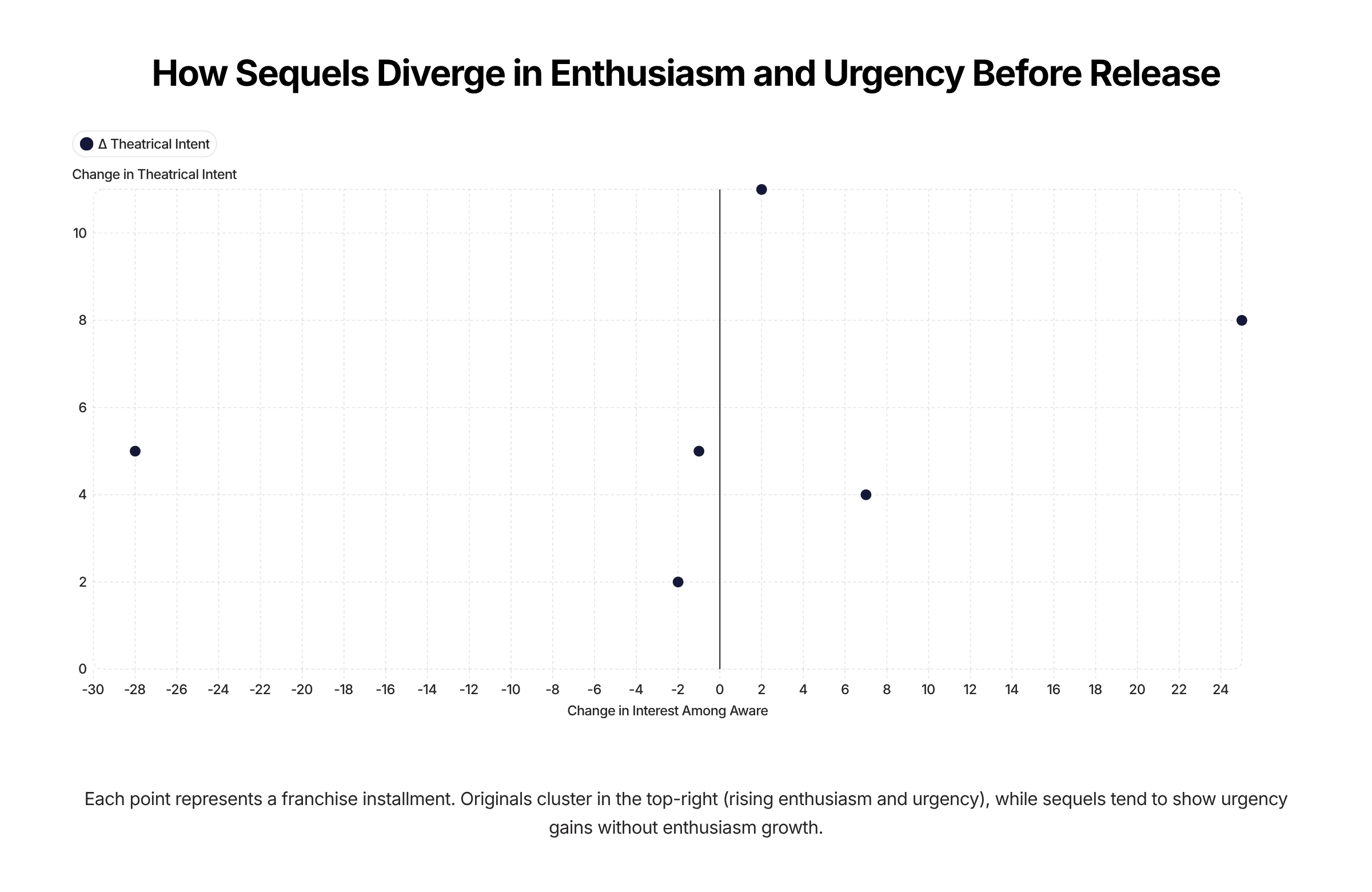
We all know why studios love sequels: built-in awareness driven by audience familiarity and a typically high box office floor. But when looking at late-cycle tracking data across several recent franchises, a clear throughline begins to emerge. Highly hyped sequels often see Theatrical Intent—those planning to see a movie in theaters—continue to rise during the final four pre-release weeks, while Interest Among Aware audiences frequently plateaus or declines.
Put another way: core franchise fans still plan to show up, but broader audience excitement tends to take a step back.
For this snapshot, I compared four pairs of franchise films:
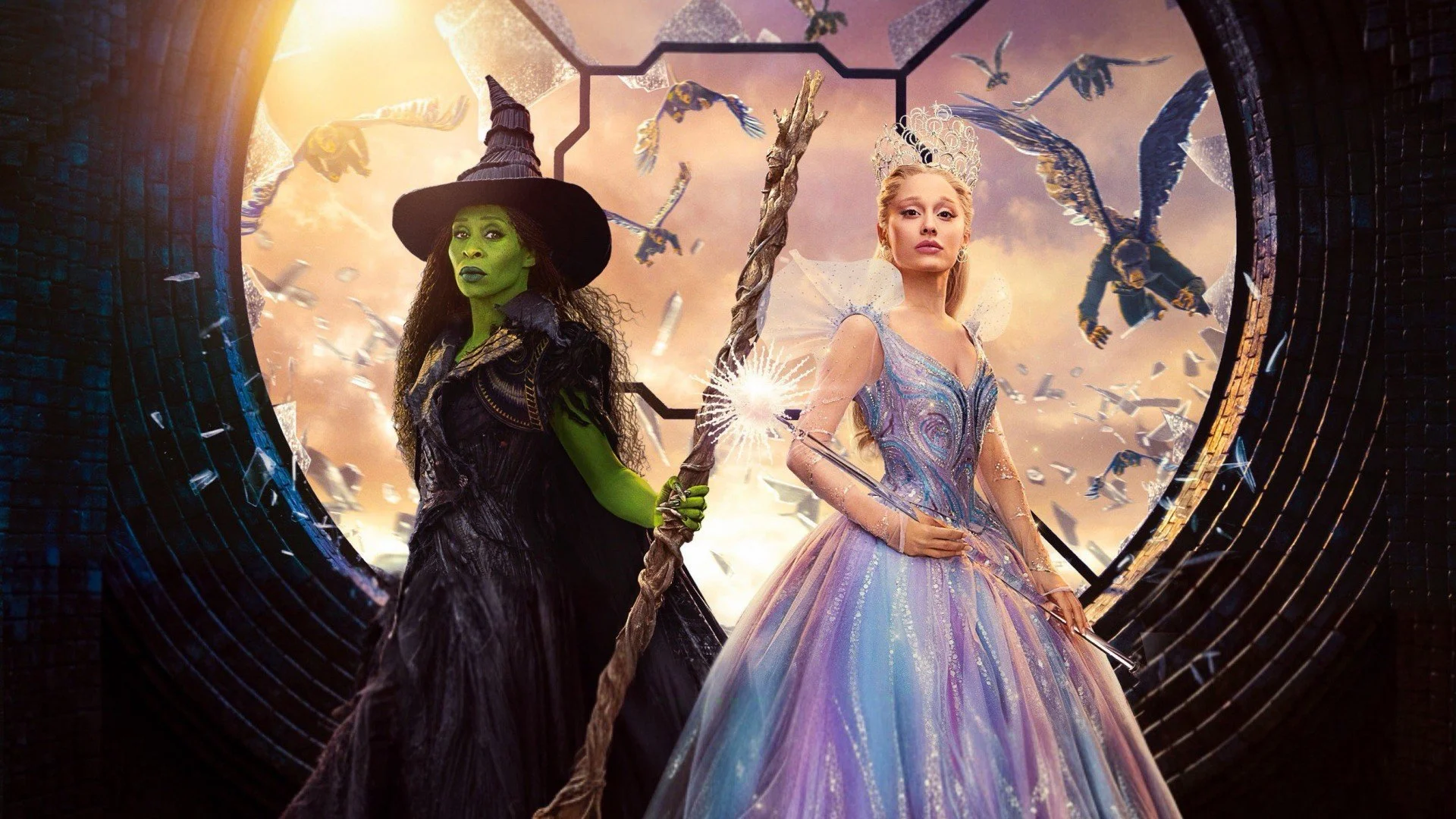
Wicked vs. Wicked: For Good
Avatar: The Way of Water vs. Avatar: Fire and Ash
28 Years Later vs. 28 Years Later: The Bone Temple
Downton Abbey: A New Era vs. Downton Abbey: The Grand Finale
In each case, the earlier film saw Interest Among Aware increase over the final month of pre-release marketing. In nearly every sequel, that same metric either flattened or lost ground. The chart below compares late-stage movement in Interest Among Aware and Theatrical Intent for original or early franchise entries versus their sequels.
Awareness isn’t the issue for sequels—Hollywood knows that all too well by now. The downside of that upside is that general audience curiosity appears to wane if viewers aren’t already all-in on the prior installment. Pre-release promotion increasingly centers on the committed franchise fan rather than trying to spark excitement among more borderline moviegoers.
This dynamic helps explain why Wicked: For Good enjoyed a larger, more front-loaded opening weekend than its predecessor, yet failed to match its total domestic box office haul. Fire and Ash, arriving just three years after fans waited 13 years for The Way of Water, opened smaller and appears less leggy. The Bone Temple is falling off a cliff despite rave reviews, while The Grand Finale performed quite well even amid a noticeable drop in enthusiasm.
The good news is that franchise films that soften theatrically can often make up some of the difference through at-home viewing. Sequels, prequels, spinoffs, and reboots tied to familiar IP that audiences skip in theaters are often prime streaming selections. Still, studios understandably want to maximize box office potential.
Looking ahead, promotional campaigns for sequels may benefit from focusing less on awareness and more on differentiation—both from competing releases and from prior franchise entries. Stakes, tone, spectacle, and novelty should take center stage once brand recognition is already in place. Audiences don’t stop caring simply because it’s the second or third adventure with familiar characters. But there is a lower ceiling on general excitement. Identifying that divergence—and learning how to split the difference—is what best positions IP titles to spread across multiple windows.