This is the question.
Creators are coming for ya!
This looks like a tsunami for traditional media and the new gold mine for brands. Much of this is true. Creators have disrupted media gatekeepers and the means of production, and the game has changed for good. But things get more complicated when the question becomes how to build real, lasting sales. So I went through the numbers.
Let’s go.
A Korean study on a cosmetics launch just produced a very seductive answer.
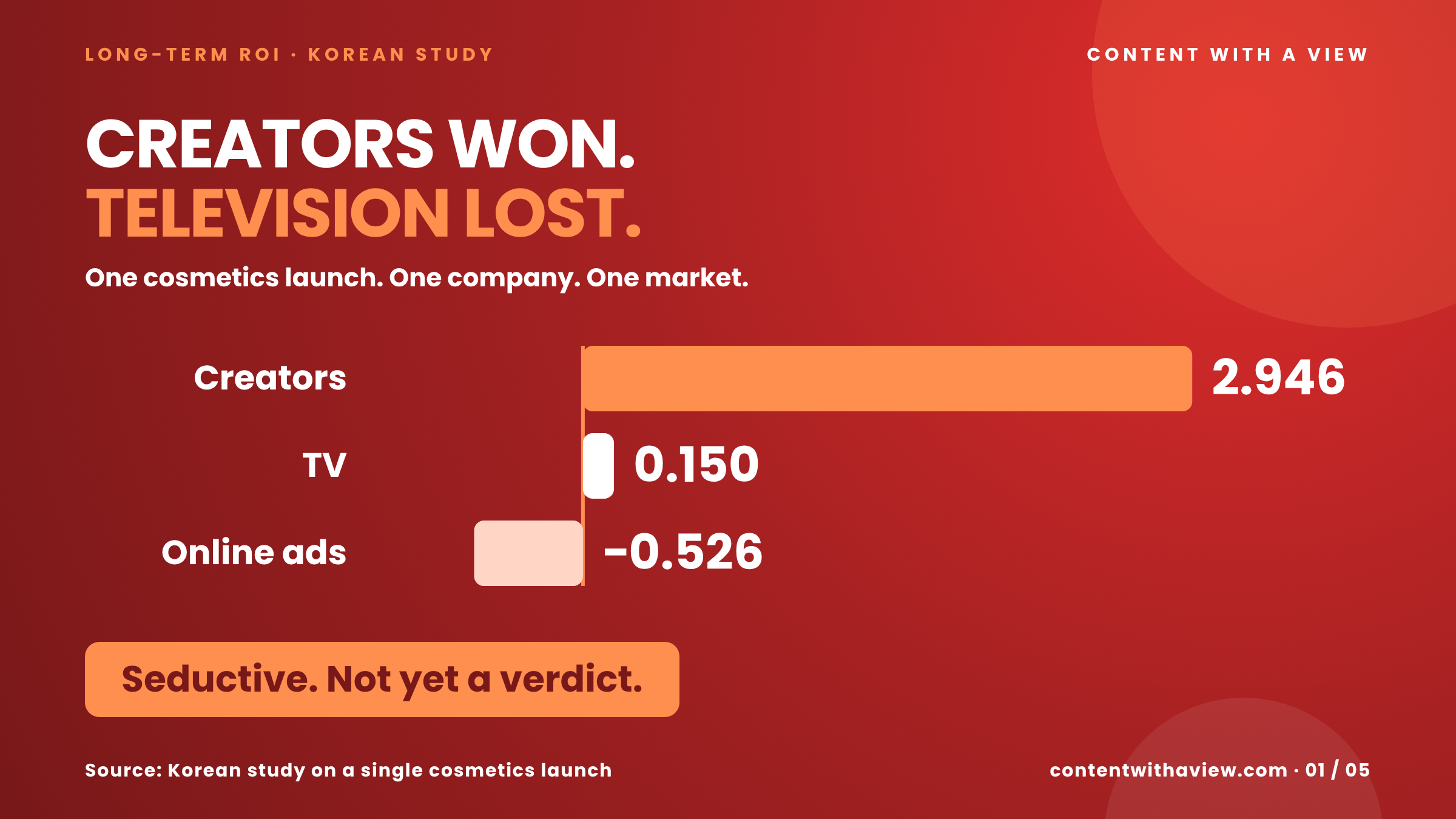
Creators won. Television lost. Pop the champagne.
Not so fast.
That research looked at one company, one product category, one market. A much broader IPA database (220 campaigns, 144 brands, more than £133 million of influencer spend) tells a less cinematic story.
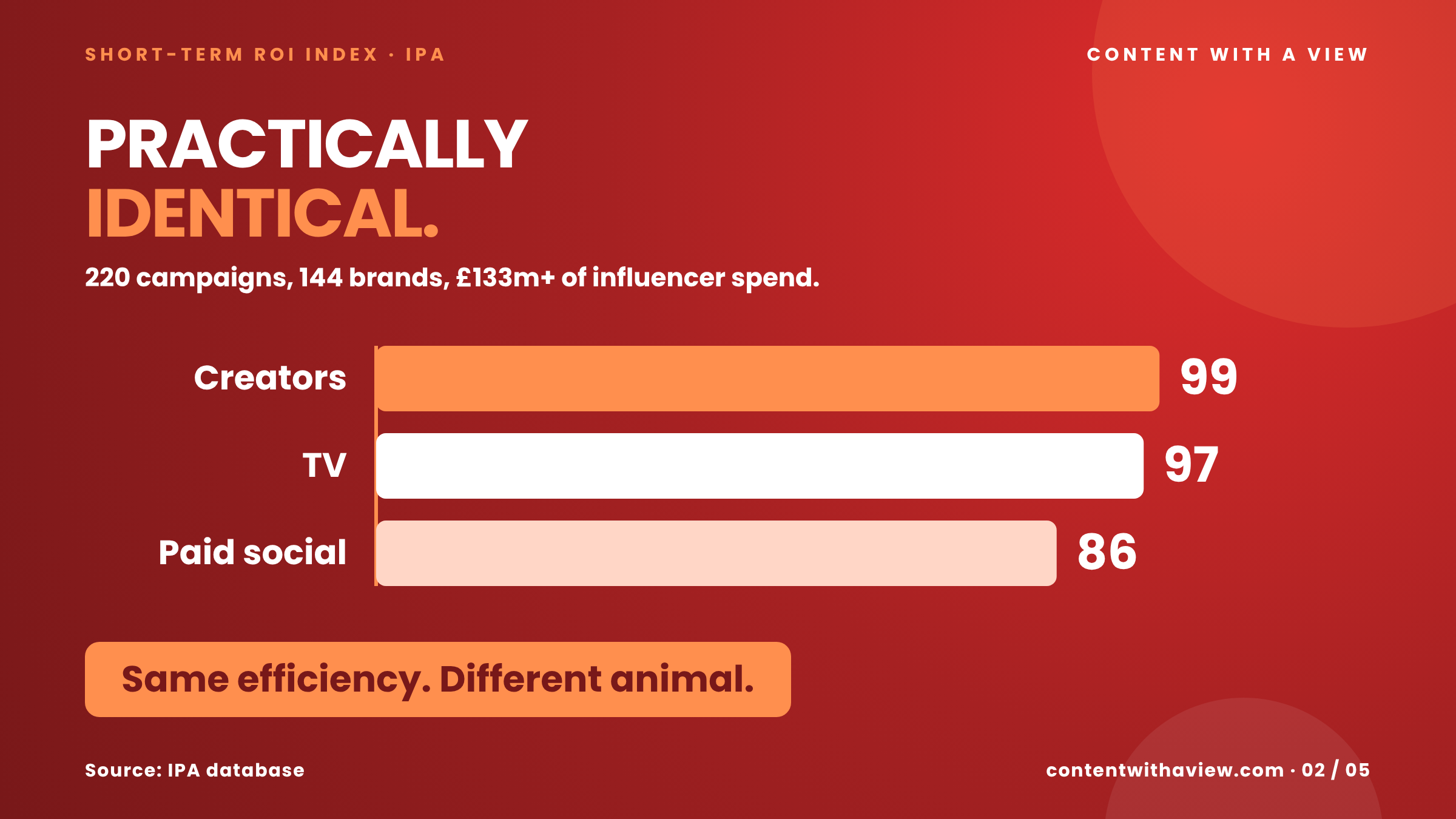
Practically identical. Then comes the number that gets left out of the headlines:
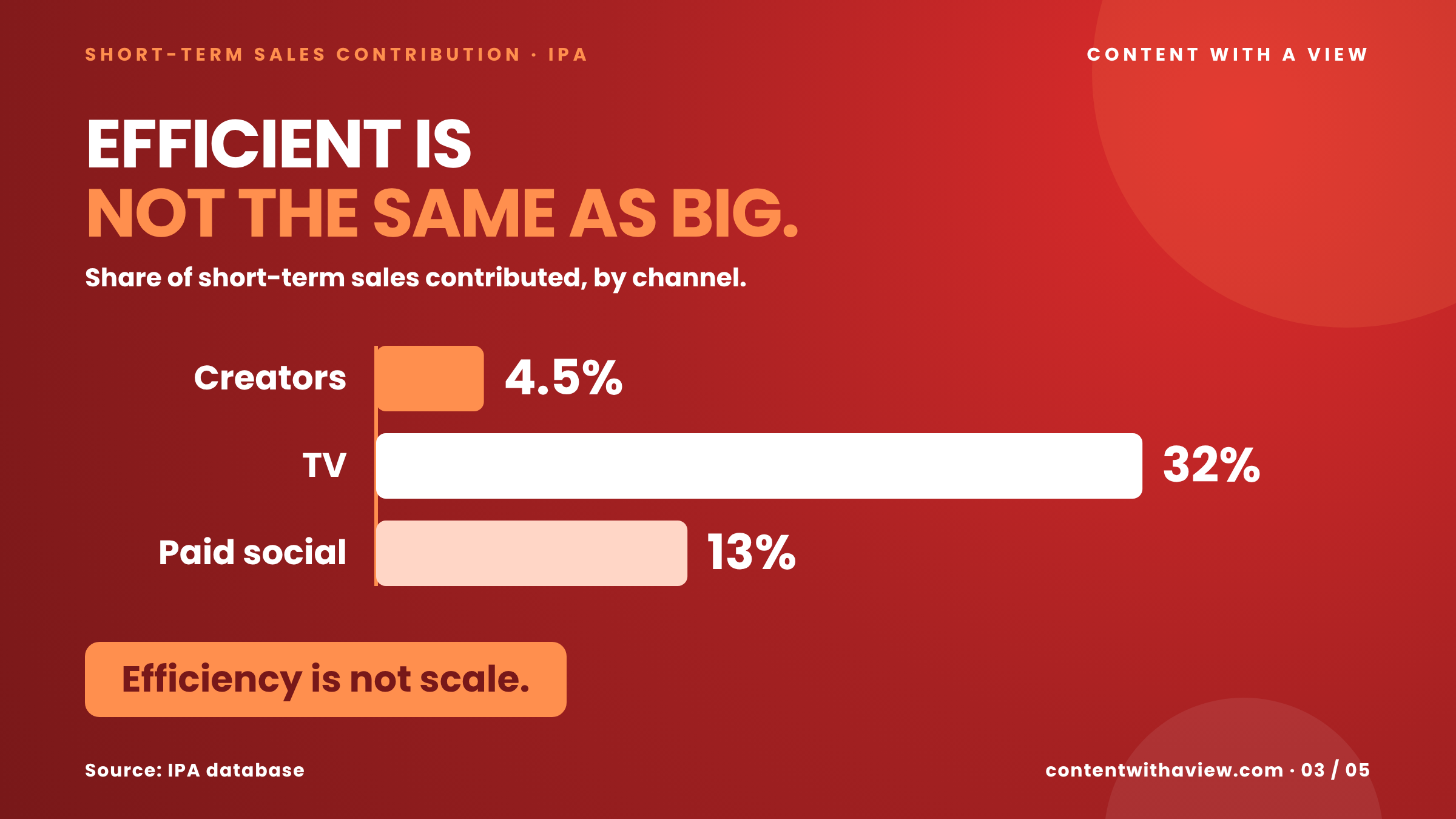
Creators look efficient. But efficiency and scale are not the same thing.
Even in the long term, where creators do particularly well, the gap is smaller than the hype suggests:
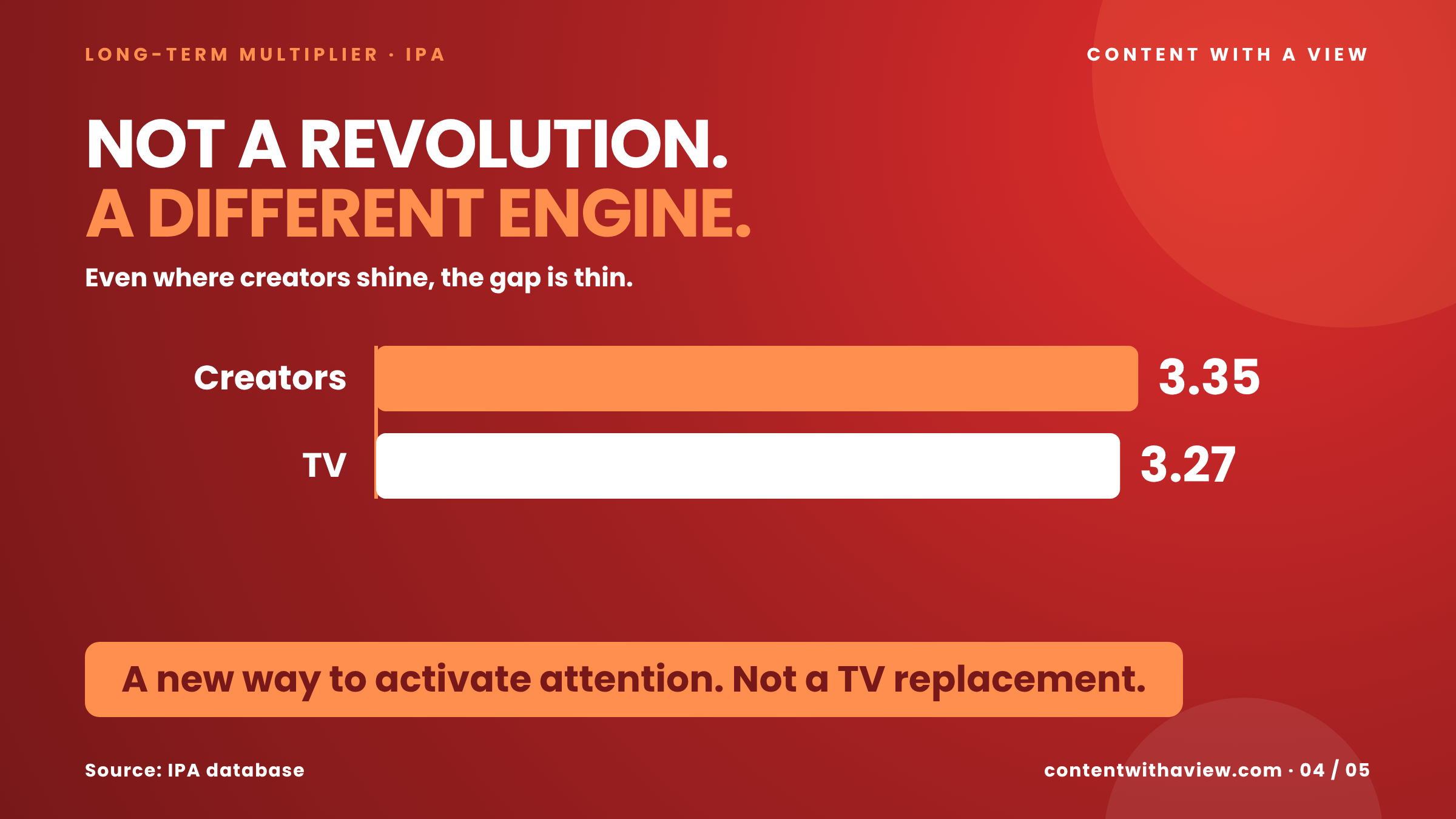
So yes, creators can sell. In some categories, in some situations, over some timeframes, they can perform extremely well. What the evidence does not say is that they are a magic replacement for television. It says they are a different way of producing, distributing and activating attention.
And this is where the misunderstanding begins.
A new coat of paint on the old media plan
Creator marketing is increasingly treated as one more line in the media mix: younger reach, faster production, lower entry costs, reusable social assets, a sprinkle of authenticity on top.
It makes the plan look contemporary and the budget look efficient. But under the paint, the engine is the same.
The brand pays. The creator performs. The platform distributes. The campaign ends.
The brand has rented another audience. The creator becomes a TV spot with a human face, produced faster and with fewer people sending invoices.
That can work. But it misses the real innovation of the creator economy.
The product is the relationship
Creators did not just invent cheaper content. They changed the relationship between whoever makes content and whoever watches it.
The best ones build familiarity, continuity, shared language, participation. Their audience doesn’t come back because one more impression was delivered. It comes back because something has accumulated over time.
A brand that buys one sponsored appearance rents the result of that process and learns nothing about how it was built.
Now Instagram wants to bring the model ont\o the TV screen. Longer videos, episodic formats, connected-TV distribution: a social platform starts looking like a broadcaster. Creators become shows. Brands are invited to fund the schedule.
Interesting. Also familiar. If the brand pays for production, the creator keeps the relationship and the platform controls discovery, distribution and data, what exactly has the brand built?
A good campaign, maybe. A new asset, probably not.
Brands: stop behaving only as tenants
Brands have always rented shelves: physical ones in retail, commercial breaks on TV, cultural relevance from entertainment IPs, trust from creators.
Nothing wrong with renting. Distribution has value, scale has value. The problem starts when renting is the only model left.
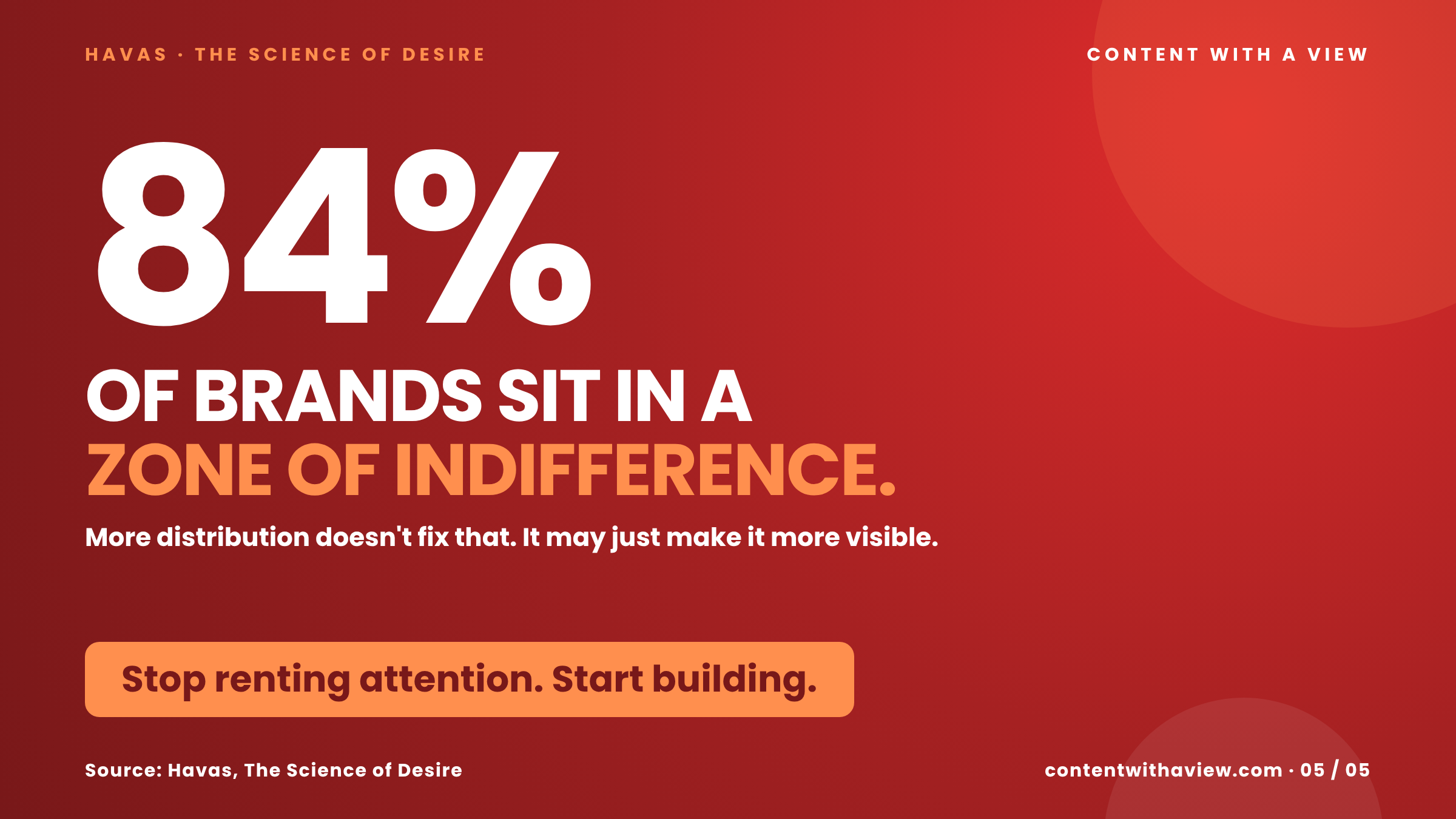
More distribution can’t fix that. It may just make indifference easier to see.
Brands don’t need to become broadcasters. They need to decide what they can own:
a recurring format
a recognisable character
a useful service
a community
a shared ritual
an experience
an IP rooted in their products, people or history
Established brands have a real advantage here. Many sit on a chest full of products, symbols, places, memories and real customer experiences, and keep buying new suitcases instead of opening it.
Media: more than landlords
Same for media. Selling access to an audience and then complaining when platforms and creators offer a cheaper door into the same room is not a strategy.
The real advantage of media was never reach alone. It is the ability to create IP, build cultural context, orchestrate participation and connect brands to worlds people choose to enter.
The next media partnership shouldn’t end at visibility. It should help the brand build something repeatable, while the media owner monetises the relationship around its IP. Amplifier, producer, cultural connector. Not a landlord charging for a temporary view.
Agencies
Brands don’t need to fire their agencies and start cutting Reels in the basement. They need to stop outsourcing the ownership of their communication system.
Agencies bring strategy, creativity, production, planning, specialist skills. What they can’t own on the client’s behalf is the brand’s entire relationship with its public.
The agency can run the campaign. The brand must keep the capability, the learning and the asset.
Otherwise every brief starts from zero, every campaign rents a new audience, and the strategic memory walks out the door with the next roster change.
AI can make all of this worse
AI is entering through the wrong door. It’s mostly sold as a blank delegation mandate: more, faster, cheaper.
Creators make media cheaper. AI makes production cheaper. Two revolutions in service of the same old advertising model.
If the strategy is weak, AI doesn’t cure brand indifference. It industrialises it.
Its real value sits upstream: reading signals at a scale no team could, connecting content response to behaviour and sales, spotting patterns, supporting interpretation, producing meaningful variations for different people and moments. AI should scale understanding and creative differentiation, not strategic abdication.
The more execution gets automated, the more human judgement matters.
To build or not to build, this is the question
It was never whether creators sell more than television.
It’s whether brands use creators, media and AI just to optimise rented reach, or to build something that can generate attention again and again.
Creators teach brands the grammar of relationship.
Media provide worlds, IP and amplification.
Agencies connect capabilities and execution.
AI makes complexity readable and personalisation scalable.
But the brand has to decide what it wants to build, and what it intends to own.
When execution becomes unlimited, deciding what deserves to exist is the real competitive advantage.
Subscribing for free to contentwithaview.com a bonus track: how to manage personal influence and attention within your workplace.
Sources
IPA database figures