Anoki's Abbey Thomas On Making Ads Fit The Moment (Not The Other Way Around)
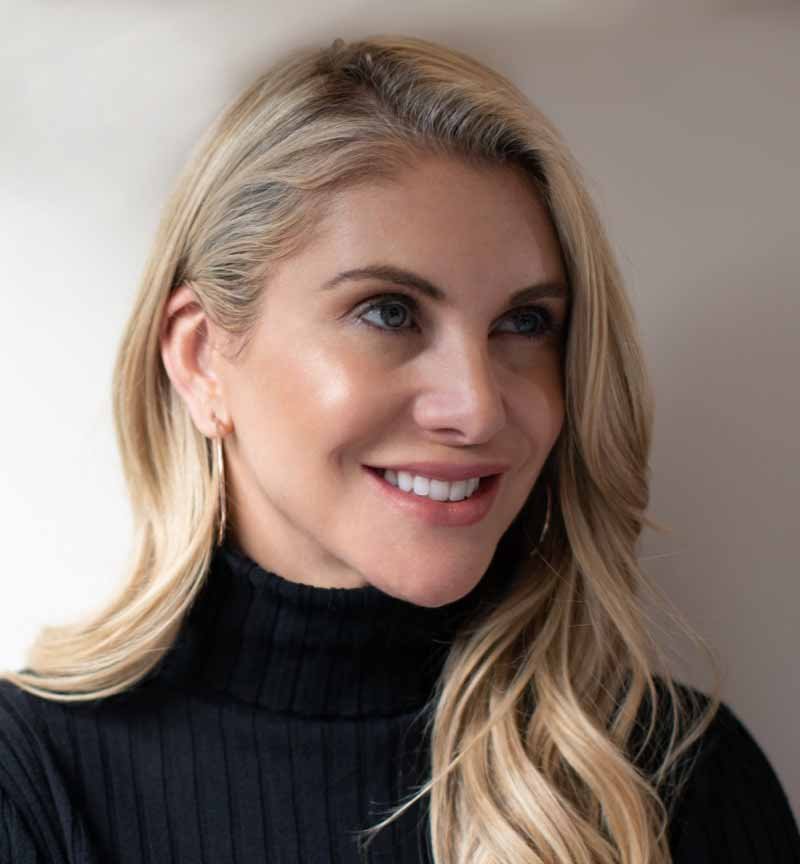
“We’ve all had that streaming experience where an ad completely takes you out of the moment. We knew the ecosystem could do better,” states Anoki’s Chief Commercial Officer, Abbey Thomas. “By using contextual signals, we can understand tone, tenor, emotion—beyond just identifying an object on screen. We’re looking at what a viewer is into at that moment and then delivering an ad that feels highly relevant.”
ALAN WOLK (AW): So if the problem is ads pulling viewers out of the story, what’s the solution you set out to build with ContextIQ?
ABBEY THOMAS (AT): We created a solution that not only drives favorability, awareness, and intent—those upper-funnel metrics—but we’re also seeing it impact lower-funnel results like sales and in-store visits. So for us, it’s about enabling publishers to create ad experiences that are more relevant both for viewers and advertisers.
AW: How does the technology actually work? Without going too deep into the weeds, how does ContextIQ analyze scenes and decide which ads fit best?
AT: That’s where our partnership with Future Today really comes through. They have this incredible library—over 220,000 shows and movies across HappyKids, FilmRise, and Fawesome. They passed that content through our system so our proprietary tech could analyze it. We break down every 30 to 60 seconds of content across 16 different signals—visual cues, sound, transcripts, and more. The result is scene-level intelligence that shows exactly what’s happening just before an ad break. That context leads to a better experience for both viewers and advertisers.
AW: What do you see as the main advantages of contextual targeting compared to more traditional approaches?
AT: When viewers watch a movie or show that has rich contextual opportunities, engagement is higher. They stay longer and don’t feel pulled out of the story. That’s a win for the streaming provider because it’s all about time spent and engagement. On the advertiser side, we see stronger outcomes: more awareness, more favorability, better suitability. And because we’re making smarter decisions every 30 to 60 seconds, you get higher fill rates and more valuable inventory. Ultimately, it lifts the entire CTV ecosystem by enhancing monetization opportunities.
AW: Future Today is an interesting partner, especially given their focus on kids’ programming. What made them such a good fit?
AT: One of the biggest advantages is privacy compliance. Contextual targeting doesn’t use any personally identifiable information, which is a perfect fit with COPPA requirements for kids’ content. Advertisers can still get scene-level precision without touching sensitive data. That’s been a huge win for our kids and family-friendly partners—whether it’s theatrical releases or tourism campaigns aimed at families. It’s already resonating strongly in the market, which shows how natural the fit is.
AW: So it’s really about analyzing the content itself rather than who’s watching, correct?
AT: Exactly. Titles like My Little Pony or CoComelon can now be paired with creative ad breaks that surprise and delight in co-viewing environments. And it goes beyond kids. Future Today’s reach includes cooking shows, FilmRise’s library, and more. Because their footprint is so vast, we’re able to apply contextual intelligence across a wide range of genres and channels. That means the benefits extend far beyond family content.
AW: From a performance standpoint, what kinds of results have you seen so far?
AT: We recently released a branded case study with CMI Media, one of our key agency partners. Using ContextIQ across their CTV campaigns delivered a 28% lift in awareness, a 26% uplift in favorability, and more than 16% in consideration. In some cases those results were five times higher than their baseline benchmarks. So the enrichment really is translating into measurable brand outcomes.
AW: Looking ahead, do you see contextual becoming the dominant approach? Or is it more about complementing audience-based targeting?
AT: I don’t think of it as either/or. I spent five years at OpenAP building audience-based buying, and I love what audience targeting can do. But the ideal scenario is where addressability meets contextual adjacency. Together, they let you understand both who the right person is and what’s happening in the content right before an ad break. Audience signals aren’t going away, nor should they. But in certain cases—like pharma regulations or kids’ programming—you can’t use audience data, and contextual becomes critical. The real opportunity is in combining the two approaches so that the ecosystem gets the best of both worlds.
AW: So to wrap up—what excites you most about where this is headed?
AT: I think the real excitement is in making advertising additive rather than disruptive. Viewers get a better experience, publishers create more valuable inventory, and advertisers see stronger outcomes. It’s about lifting the whole ecosystem. And the more we refine contextual signals, the more seamless ad experiences will feel. That’s where the future of CTV is going.