V’s Guy Edri On Why “TV Is TV” Is More Than Just A Catchphrase
The following is the first of our Innovator Spotlight interviews from our recent report The TV OS Wars: The Battle For The Living Room. Download your copy for free thanks to our sponsors, V, Ventura TV OS and WunderKIND Ads.
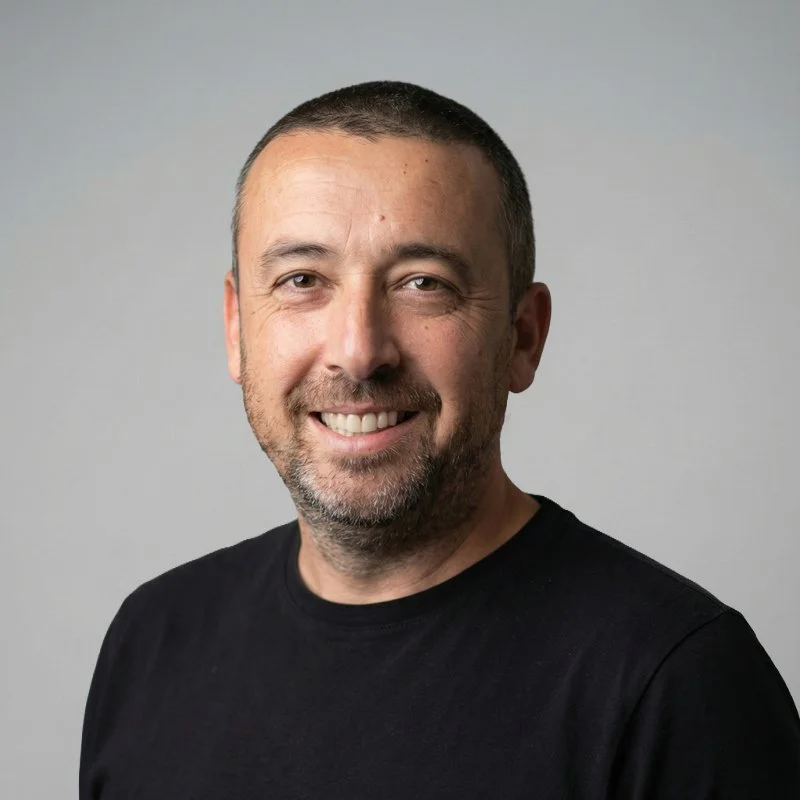
“Our mission is simple,” declares Guy Edri, CEO of V, the company formerly known as Vidaa. “Give users the best product, give partners the right platform and make TV work the way it should work now.”
ALAN WOLK (AW): You’ve been generating a lot of controversy with this idea that “TV is TV.” What exactly do you mean?
GUY EDRI (GE): Calling something CTV made sense when it was not mainstream. In the beginning, you needed a separate name because the technology was new.
It is like when the internet started. People said, “I have a website.” That was a big deal then. Today, everybody has a website.
The product did not change. The technology changed.
It is the same with TV. It does not really matter which form of ingestion brings the content to the TV. If you want to watch a Champions League game, the best place is still the TV. If you want to watch primetime content at home, the best place is still the TV, not the small screen.
So yes, TV is TV.
AW: Why do you think that idea makes people uncomfortable?
GE: Technology makes people scared in the beginning. But once people adopt it, the name changes.
The electric car is a good example. At first, people will call it an electric car. Eventually, it will just be a car.
The same thing is happening with TV. In the beginning, people said “CTV” because it was not really a smart TV. But now we have AI, better features and a TV that is actually becoming smart.
People are uncomfortable because, if you accept that TV is TV, then you have to rethink the way the whole industry is organized. You have to rethink the buckets.
AW: Where do broadcasters fit into that?
GE: I spoke to the EBU, the European Broadcasting Union, and these are channels that still have great content. In many cases, their content is much better than FAST channels.
But they lost respect from viewers because nobody showed them the right way to adapt to the new world. They are still thinking about their own apps. But users do not want to search through every app.
The broadcasters should come to us and we can put them front and center in a way that works for the consumer. I want users to have the best experience. I am not against broadcasters. I am here to support them.
But they need to wake up. If they cannot listen and change, that will be their problem. We will survive because we are the first screen.
AW: In your vision, what is the actual role of the TV operating system?
GE: I think it is three things.
One, it should be the main display of the home, not just the TV.
Second, I hope people will not need to search for content anymore. They should have all the content, and it should be organized in the right way.
Third, it should not only be TV. Music and other things should be there too.
The screen is already in the living room or the bedroom. It is a beautiful piece of technology, but today it is doing maybe 5% of what it can really do.
AW: How far does your vision go beyond just TV sets?
GE: We believe the TV OS should become the platform of the home. That starts with the display, of course. We want to grow more partners and we want to grow our user base.
But in the next few months, we will launch more products with V that are not TV. We spoke about this at CES. We showed use cases for products like refrigerators. I do not talk about things if we are not going to do them.
The strategy is very clear, and we are consistent with that strategy.
AW: How do you balance the user experience with the pressure to monetize the home screen?
GE: We are not an advertising company.
Some of our counterparts only care about advertising and not enough about the user. We think first we need to make the best user experience. Only then do you give services.
Advertising is part of the services. I am not saying it is not. But it has to be in the right amount and in the right way.
If the user experience is not good, nothing else matters.
AW: What is Ventura’s role in that strategy?
GE: We are talking to Ventura, and we announced that they will sell our inventory. But Ventura is not the OS. If you read the press release, there is a reason it says ecosystem and not OS.
They are building an ecosystem for ads, and I love that.
I also like Jeff Green. I think there are a lot of similarities between me and him. He is an entrepreneur who built something himself.
AW: You just launched a measurement tool called the V Index. What is the story behind that?
GE: We are starting to give some data to our partners, of course in line with privacy and all of our agreements.
For example, we can say that at this time in the UK, the amount of streaming was X amount versus linear. We can say that on 85-inch TVs, the penetration of SVOD is much higher than on 32-inch TVs. We can say that a certain service is much stronger in Manchester, Liverpool and London than in other areas.
AW: How much of that data comes from ACR?
GE: ACR can identify content, but it is a commodity. The OS has much more. I know when the TV opens and closes. I know if someone goes into YouTube, though I do not know what they watch on YouTube. I know if they open Netflix, though I do not know what they watch on Netflix. I know the TV size. I know if the TV is likely in the living room or the bedroom.
I have 10 billion or 12 billion logs of data.
AW: Why is the household view so important?
GE: We are a household company, not a personal-device company.
The TV industry keeps trying to make the TV a personal device, but it is not. It is a household screen. In the living room or in the bedroom, it is usually shared.
If I know that you watch Netflix three times a week at nine o’clock in the evening, which is primetime in the TV world, and I know the size of the TV and where it likely sits in the home, that tells me a lot.
People make this very complicated, but the answers are simple. TV has always been about households and primetime.
AW: What are you building with V Shop?
GE: V Shop is going to be like a great shopping center on the TV. Think about shelves in retail.
We will have 14 slots, and when big brands do a campaign with us, we give them the ability to have a shop there. Then we can do brand awareness and, in the shopping area, brand performance. If they sell, they share with us through an affiliation model.
I think this will become mandatory for advertisers. It can also help broadcasters team up with us because this is what they need to compete with guys like Amazon and Google.