My friend Evan Shapīro has another one of his TV Populist pieces up today, ranting about the greed and stupidity of so many of the people running major media companies.
He’s not wrong in his take—the level of WTF-ness over the past half-decade or so has generally been off the charts.
Take the Albanian Army as just one easy example.
The problem is, it never really mattered.
Because the sad fact is we’re talking about a bunch of buggy-makers at the dawn of the age of the automobile.
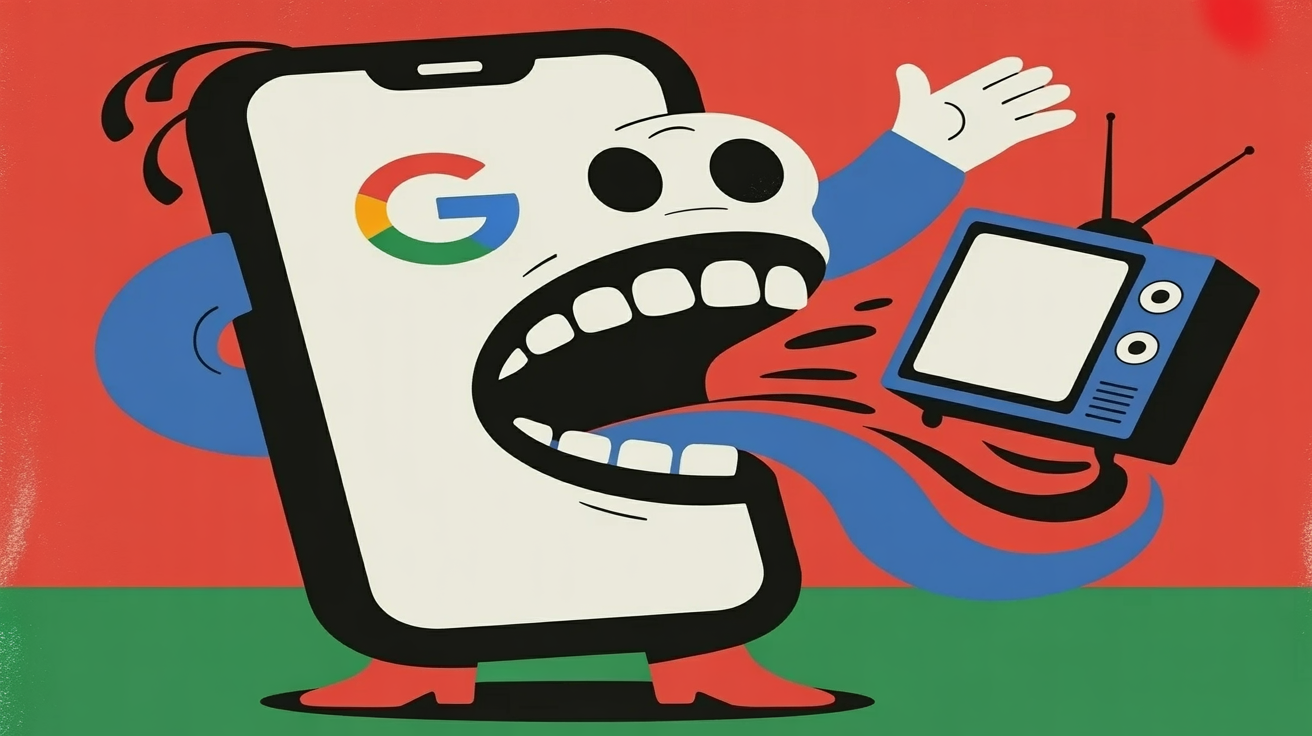
Meaning they’re all ultimately going to wind up as Google Chow. (Or Amazon, Apple or even OpenAI or Bytedance Chow, as the case may be.)
Yes, there was an outside chance that had all of the major media companies banded together they could have created an entity that had the power to take on the big tech companies.
But it was a very outside chance, one that really had no serious possibility of ever happening given the logistics of getting all of these public companies to work together. And that’s before you factor in the massive egos Shapīro correctly refers to.
Which brings us to the question then of how bone-headed these moves actually were, given the task at hand.
The problem stemmed from the fact that the CEOs were facing two seemingly conflicting goals:
Milk as much revenue as possible out of the company so that shareholders receive value from the depreciating assets.
Create an entity that Google, Amazon or another company would pay a lot of money to acquire.
The first ask may sound easy enough, but it’s complicated by Wall Street’s inability to actually understand how the current media industry works (e.g., their struggles to wrap their head around Roku’s dual-revenue stream business model).
The second ask is more philosophical.
Because it’s hard to know what will ultimately prove valuable to the tech giants: a company with a wide distribution network across both US and international platforms, or a company known for having stellar creative output of the sort that wins awards and gets the chattering classes chattering.
Or even both.
We have, of course, seen this show before.
In fact, there was an article in the New York Times a week or two ago remarking on how the release of Jeffrey Epstein’s emails recalled a New York where magazine publishers reigned supreme, a world where the words “Condé Nast” conveyed cachet.
A world that no longer exists.
Which leads me to wonder whether, like their publishing and music industry peers, there was anything the Tina Browns and Anna Wintours of the world could have done to save themselves.
Or if it was like trying to drain the ocean with a teaspoon.
Because what they were selling—long, well-researched stories with a distinct New Journalism authorial voice and lots of Annie Leibovitz photographs, was not what their successors were buying.
At least not most of them.
TV too seems to be facing the same problem as 90s-era glossy magazines.
At a time when Hollywood is buzzing about microdramas and creator content, is anyone really looking for the next Succession or even the next Law and Order?
This is not to say that TV is dead or dying or anything of the sort. It’s just sort of doing a slow fade, like Homer Simpson into the bushes, and what audiences will soon want is likely to be markedly different from what they had wanted in the years of the midcentury monoculture.
And that’s before you factor in AI and the massive changes it’s about to bring.
With a future this uncertain, it makes sense to control the things you can control.
Meaning, for many of these CEOs, that seemed to be owning a big enough slice of the current TV universe so that the new tech overlords would spend billions to acquire them.
While simultaneously hoping that said tech overlords wouldn’t look too deeply at what was inside.
It’s a risky proposition—the tech overlords might not care about the size of the organization versus the hole that acquiring the organization would allow them to plug.
Or they may care deeply.
Which means that given the lack of any clear winning strategy, greed and ego may not be as boneheaded as they may initially seem.
At least not for the CEOs and their biggest shareholders.
For the rest of us however…that’s a different story.