Charlie Ergen’s Latest Act Looks Awfully Familiar
Charlie Ergen has spent much of his career looking at communications assets and seeing something other than what they appeared to be.
A satellite-equipment business became DISH Network, one of pay-TV’s great disruptors. Later, Ergen accumulated billions in wireless spectrum and tried to make DISH America’s fourth national mobile carrier.
That chapter ended badly. EchoStar has spent the past year dismantling much of the strategy, including a $23 billion sale of 50 MHz of spectrum to AT&T and separate spectrum agreements with SpaceX worth nearly $20 billion. DISH Wireless is winding down its 5G network, while DISH DBS entered Chapter 11 this summer.
The strategic reflex behind the gamble, however, appears very much alive.
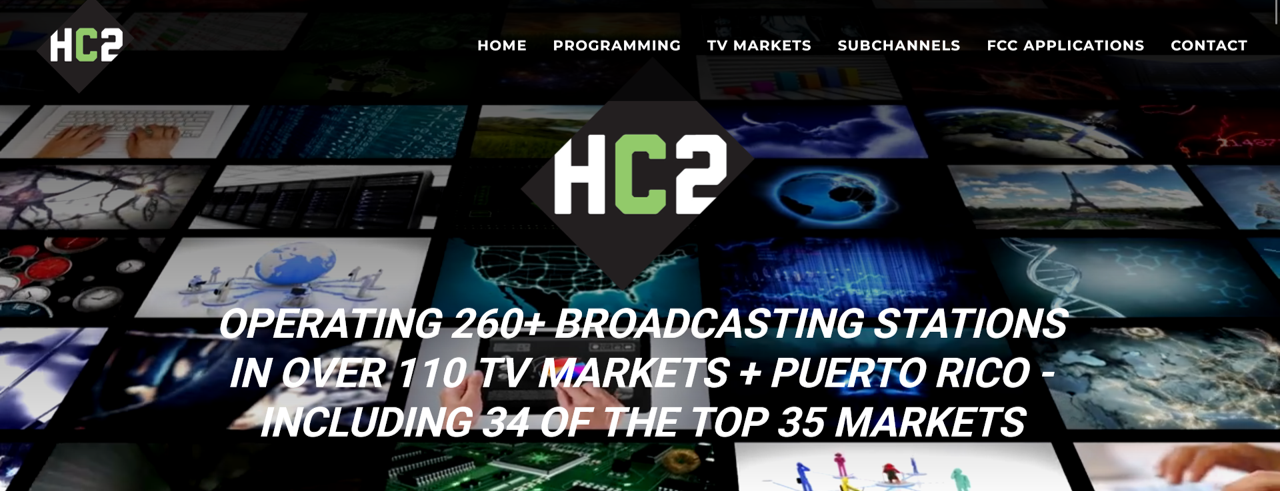
In September, Ergen-controlled CONX completed its acquisition of a 75% interest in HC2 Broadcasting, owner of one of the country’s largest collections of low-power television stations. HC2 has also been pursuing 5G Broadcast, a one-to-many technology for delivering video and data to compatible mobile devices. After selling tens of billions in wireless spectrum, small TV stations might seem an unlikely next move. The attraction may lie less in programming than in the spectrum and infrastructure underneath it.
A Different Kind Of Television Network
HC2 operates roughly 260 stations across more than 40 states, overwhelmingly low-power and Class A facilities. Most bear little resemblance to a familiar local station with a newsroom and major-network affiliation. Collectively, they look more like a national transmission platform assembled from relatively inexpensive facilities.
HC2 asked the FCC last year to allow low-power stations voluntarily to use 5G Broadcast as an alternative transmission standard, and company representatives were still pressing the agency in August.
The practical significance is straightforward. A television license could support more than a conventional channel lineup. Video, emergency information, software updates and large data files could be sent to compatible phones, vehicles and connected devices, with one transmitter serving many receivers rather than a separate stream for each user.
HC2’s proposal preserves a free over-the-air programming component, so this is not simply a plan to turn TV stations into cellular towers. But it does suggest that substantial portions of a television channel could eventually support businesses that look more like datacasting than television.
A Very Ergen-Like Proposition
Ergen’s career is filled with assets whose value depended on technology, regulation or market structure changing what they could ultimately do. HC2 arrives just as EchoStar retreats from the enormously expensive effort to build a conventional nationwide wireless network.
It also offers a far cheaper entry into an adjacent communications business. The transmitters and licenses already exist. EchoStar, meanwhile, has an option through May 2028 to acquire as much as 80.1% of HC2, meaning the stations now controlled by CONX could eventually move directly into Ergen’s principal communications company.
None of that establishes what Ergen ultimately plans to build. But it makes HC2 look like more than simply a passive investment in low-power television.
When Television Spectrum Stops Being About Television
The implications extend beyond Ergen because broadcasters are already debating the future value of television spectrum. ATSC 3.0 is increasingly promoted not only for better television but for datacasting, emergency communications, positioning services and enterprise applications.
Improved compression also allows existing television services to occupy less capacity than they historically required. That leads directly to a question we raised here earlier this year: how much of a TV channel still needs to be television?
HC2 pushes that debate further by asking whether some licensees should be allowed to employ another technical system altogether. Broadcasters receive access to public spectrum subject to public-interest obligations historically centered on free over-the-air service to local communities. As more capacity supports commercial data businesses, that original bargain becomes harder to ignore.
We previously described the same tension around ATSC 3.0 as a potential shift from “public trustee to private courier”. The more broadcasters demonstrate that their spectrum can support valuable businesses beyond television, the easier it becomes to ask how much spectrum television itself ultimately requires.
One More Spectrum Bet
There is a legitimate innovation case here. Broadcast architecture is unusually efficient at sending the same large file or video stream to many receivers simultaneously, and finding additional uses for existing transmitters and spectrum can make economic sense.
The Ergen angle is optionality. A viable 5G Broadcast ecosystem could make hundreds of transmitters operating in desirable sub-1 GHz spectrum far more strategically interesting than the programming businesses occupying them today. If that market never develops, CONX still owns one of the country’s largest collections of broadcast licenses and transmission facilities for more traditional leverage purposes.
There are substantial reasons for skepticism. 5G Broadcast needs a larger ecosystem of compatible chipsets, handsets and software, plus customers willing to pay for the capacity it creates. Sinclair and ATSC have also raised technical and strategic objections.
Yet the transaction is notable because Ergen is emerging from one of the most bruising episodes of his career after spending billions trying to transform DISH into a national wireless competitor. His response has not been to abandon the instinct behind that gamble. He has again positioned himself around communications assets whose future usefulness could look substantially different from their present business.
For television, the larger question is whether he has identified another transformation early — or simply found another example of spectrum promising more than the businesses built upon it. Either outcome would be familiar Charlie Ergen territory.
Local News To Peruse:
From Bad To Worse: 2026 Is Shaping Up To Be “A Super El Niño Year For Local News” - Sophie Culpepper [NiemanLab]
The State of Local News - Zach Metzger and John Volk [Northwestern Medill Local News Initiative]
Local Newspaper Closures Have Surged To More Than Three A Week - Angela Fu [Poynter]
Whither McClatchy, A Once Great Newspaper Company - Brier Dudley [Seattle Times]
ABC Alleges FCC’s Attempts To Curb Its Free Speech Were Designed To Evade Judicial Review - Todd Spangler [Variety]
Trump Commercial Railing Against His Enemies Kept Airing After Court Blocked It - Jon Brodkin [Ars Technica]
NAB Opposes MVPDs Attempt To Freeze TV Cap Melt - Adam Jacobson [Radio+Television Business Report]
With Radio Waiting Its Turn, NAB Defends TV Cap Repeal - Cameron Coats [RadioInk]
A Costly Political Blunder Sent A Senate Ad To The Completely Wrong Portland - Isabel Funk [The Oregonian/OregonLive]